



Vegetable-Tanned vs Chrome-Tanned Leather: What Actually Changes
A hide is not leather. Left alone it rots. Tanning is the step that stops that, by binding the collagen fibres so they no longer decay, and there are two ways of doing it that produce genuinely different materials.
Neither is the better one. They suit different objects, and most of the confusion around this subject comes from people arguing about which wins without saying what for.
Vegetable tanning
The older method, and it does what the name says. Hides sit in pits or drums of tannins drawn from plant matter, chiefly tree bark, along with leaves and other vegetable sources. The tannins work their way through the hide slowly.
Slowly is the operative word. Vegetable tanning takes weeks, and for heavy hides it can run to a couple of months. That time is most of the reason it costs more.
What comes out is firm. A vegetable-tanned hide starts stiff and stays that way until it is used, then gradually softens and moulds to whatever it holds. It darkens with sunlight and skin oils, which is what people mean by patina: the surface records where it has been. Colour range is limited, running to tans and browns, because the tannins themselves have colour.
Chrome tanning
The modern method, developed in the nineteenth century, using chromium(III) salts rather than plant tannins. It is fast: a day or two rather than weeks.
That speed is why it dominates. Around 80 per cent of the world's leather is chrome tanned, according to the International Chromium Development Association.
The result is soft from the first day, takes dye across the full colour range, and tolerates getting damp better than vegetable-tanned leather does. It does not develop patina in the same dramatic way, because there is less in the tannage to darken. It ages by wearing and burnishing rather than by changing colour.
Side by side
| Vegetable-tanned | Chrome-tanned | |
|---|---|---|
| Tanning agent | Plant tannins, mainly bark | Chromium(III) salts |
| Time | Weeks to months | A day or two |
| Share of world production | Small minority | Around 80 per cent |
| Out of the box | Firm, needs breaking in | Soft immediately |
| Ageing | Darkens, strong patina | Burnishes, holds colour |
| Colour range | Tans and browns | Effectively unlimited |
| Water | Marks readily | More tolerant |
| Cost | Higher | Lower |
| Suits | Belts, holsters, structured goods | Soft bags, garments, upholstery |
The chrome question, answered properly
This is where most writing on the subject becomes unhelpful, so it is worth being precise. There are two different chromiums and they are routinely confused.
Chromium(III) is what tanneries use. It is a naturally occurring form and is not the hazardous one.
Chromium(VI), hexavalent chromium, is the one people are thinking of. It is allergenic on contact with sensitised skin and certain compounds are classified as carcinogenic, mainly by inhalation. It is not a tanning agent and is not deliberately used. It can form afterwards, when chromium(III) oxidises because of poor chemical treatment during finishing or bad storage conditions.
So the real question is not "does this leather contain chrome" but "was it finished by someone competent". Two things answer that.
The first is law. EU legislation prohibits chromium(VI) in leather that touches the skin, and REACH Annex XVII entry 47 caps it at 3 mg/kg. Leather sold legally into the European market has to meet that.
The second is certification. The Leather Working Group audits tanneries, and its higher-rated tanneries add vegetable tannins or antioxidants after tanning specifically to stop chromium(VI) forming. If a maker names an LWG-rated tannery, that is worth more than the word "eco" anywhere on the page.
Vegetable tanning has its own environmental account, incidentally, and it is not blank. It uses considerably more water and time, and the spent tannin liquor has to be dealt with. The honest position is that both processes can be run well or badly, and how a tannery is run matters more than which method it uses.
Which one belongs on which object
Match the tannage to the job and the argument mostly dissolves.
Vegetable-tanned earns its place where firmness is the point. A belt that should not stretch. A knife sheath that must hold a shape. A structured bag meant to arrive stiff and become yours over five years. If you want the object to visibly record its use, this is the one.
Chrome-tanned earns its place where softness and consistency are the point. A bag you want comfortable on the first morning rather than the hundredth. Anything in a colour that is not brown. Anything that will meet rain regularly.
A weekender that arrives rigid and stays rigid for a year is not a more authentic bag. It is the wrong leather for the job.
What NEGOTIA uses, plainly
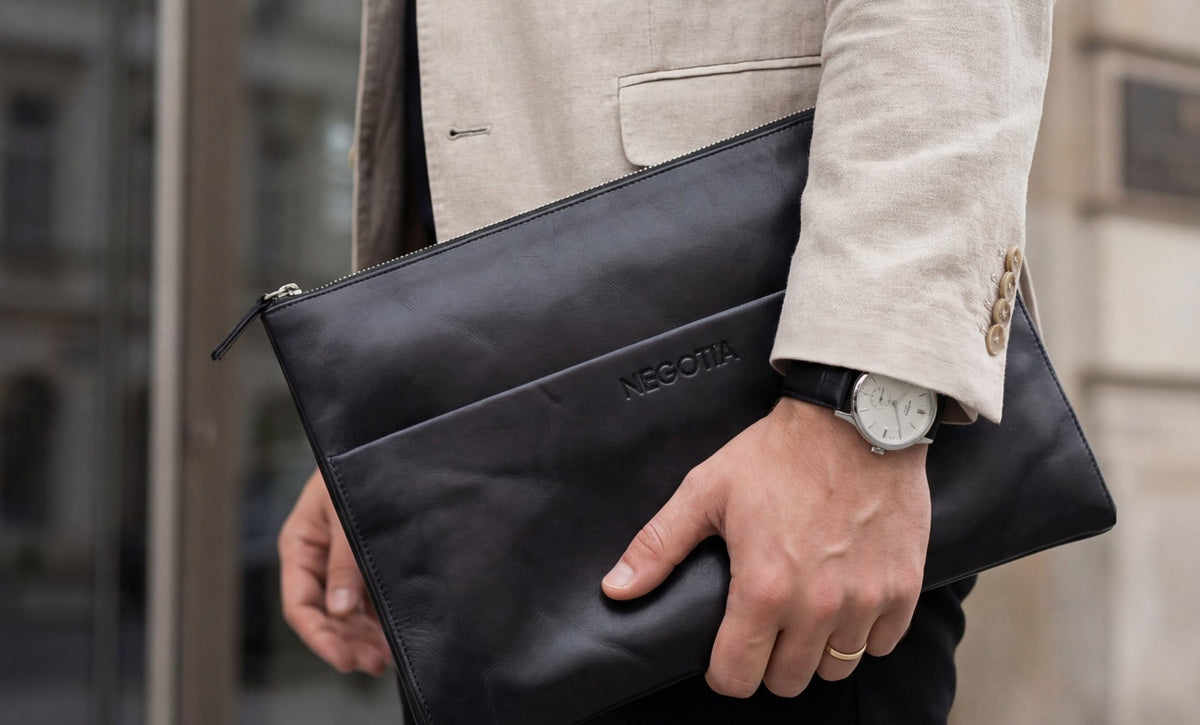
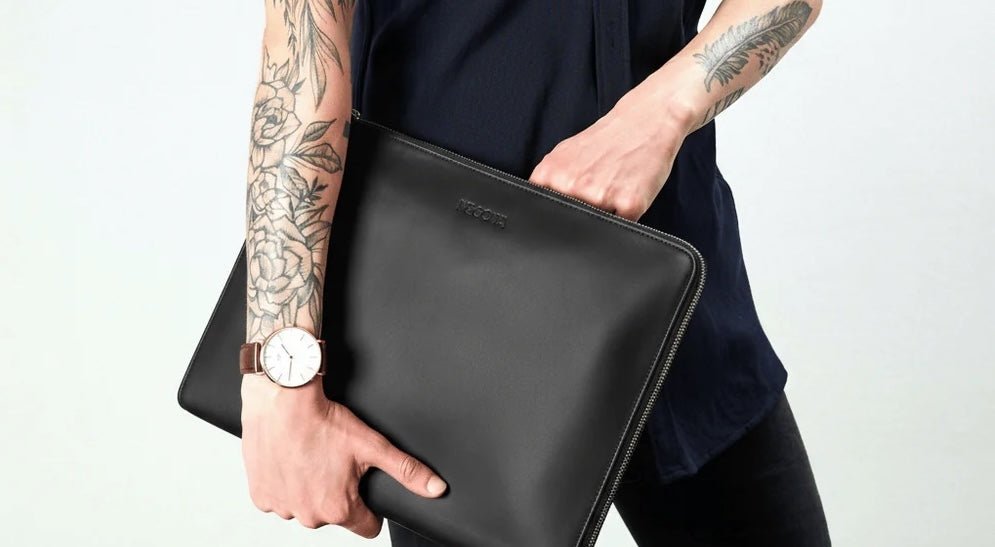
Our product pages state Nappa leather, and Nappa is typically chrome-tanned. We are on the chrome side of this comparison and there is no reason to be coy about it.
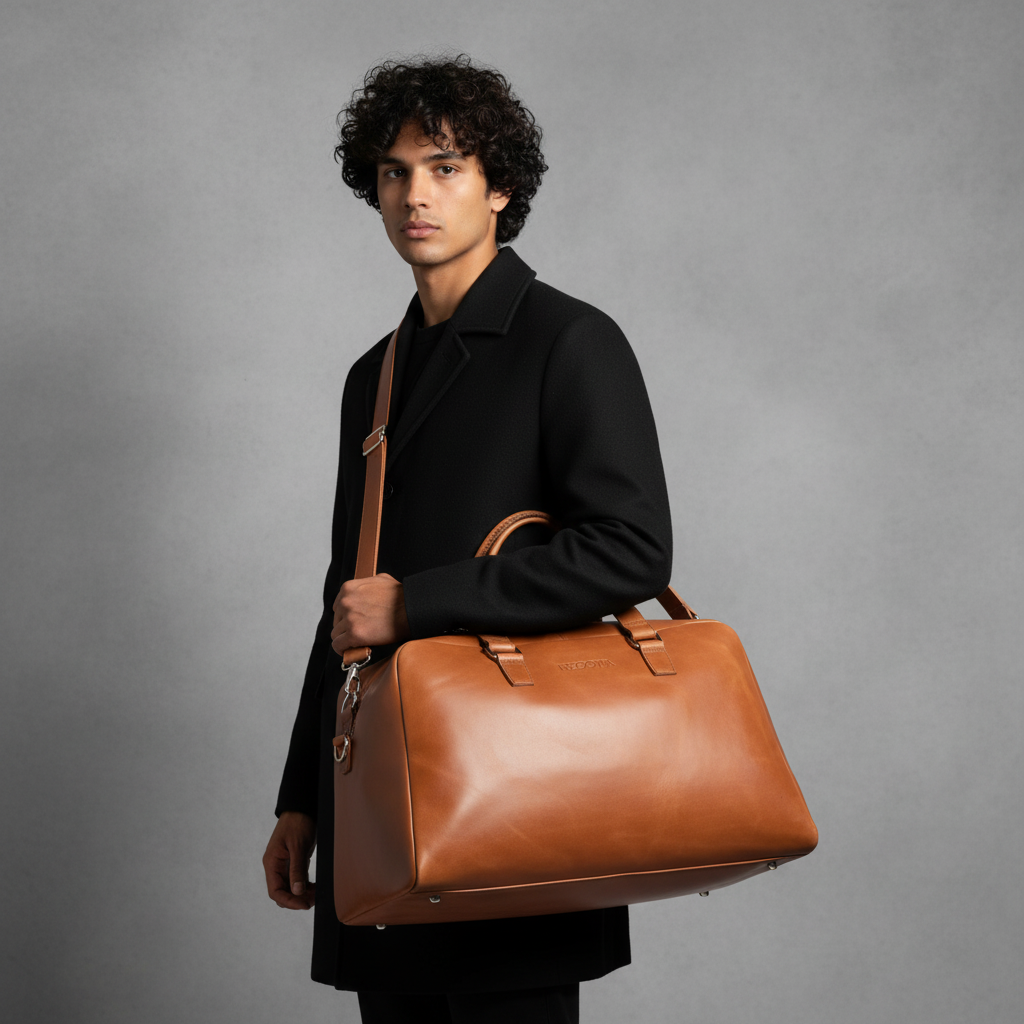
It is also the right side for what we make. A laptop folio or a weekender has to be supple the day it arrives, has to come in black as well as cognac, and has to cope with being carried in the rain between a car and an office. Vegetable tanning would make those products worse at their actual job, and would cost more for the privilege.
If you want the full explanation of what Nappa does and does not tell you, what is Nappa leather covers it, including why the word says nothing about grade. For how the material behaves once you own it, how to care for a leather bag is the practical half.
The range, with materials and dimensions listed on every product, is in the bags collection.
How to tell what you already own
No lab required. Three signs, in order of reliability.
- Feel the edges. Vegetable-tanned leather is usually thicker and the cut edge is pale, firm and burnishable. Chrome-tanned edges are often thinner and show a faint blue-grey core where the leather is cut, because of the tannage.
- Look at the colour. Bright colours, black and true greys are almost always chrome. Natural tan that has darkened unevenly where hands touch it is almost always vegetable.
- Press it. Vegetable-tanned leather holds a crease and takes a moment to recover. Chrome-tanned springs back.
None of these tells you whether the leather is good. That is the grade, which is a separate axis entirely, and the one that decides how the thing looks in five years.