



On Arriving: What Gives Away That You Have Travelled
There is a fifteen minute stretch at the end of every work trip that decides how the whole thing felt. You are off the train, you are not yet in the room, and you are somewhere neutral and slightly too warm, holding everything you brought.
Most people think arriving well is about the suit. It is not. The suit is the easy part, because a good jacket survives a few hours on a seat back and nobody is examining it. What gives you away is the bag, and specifically whether you have to do anything to it before you walk in.
The actual tell is rearranging
Arriving badly has one reliable signature, and it is not creases. It is a man standing in a lobby with his bag open on a chair, taking things out to find one thing.
Everyone in that lobby reads it the same way. Not as untidiness, which would be forgivable, but as having been in transit, which in a professional context is a slightly weaker position to arrive in. You want to appear to have come from somewhere, not to have been travelling.
So the question that decides arrival is narrow and practical: can you get at the thing you need without opening the main compartment? If yes, you walk in. If no, you perform the ritual.
Which is an argument for interior structure, with a caveat
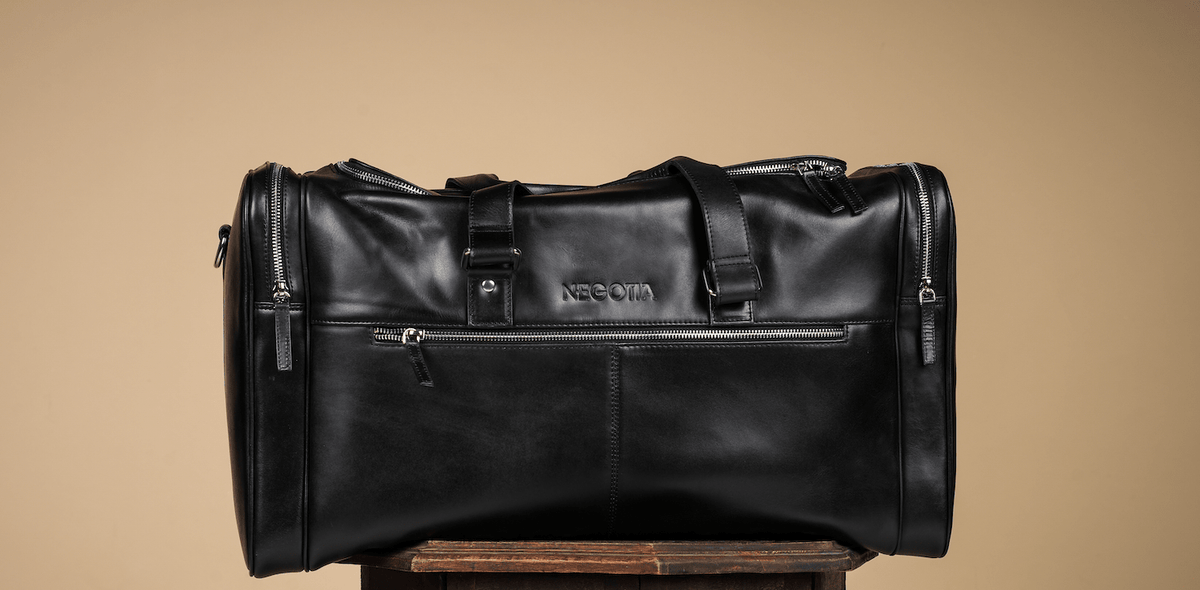
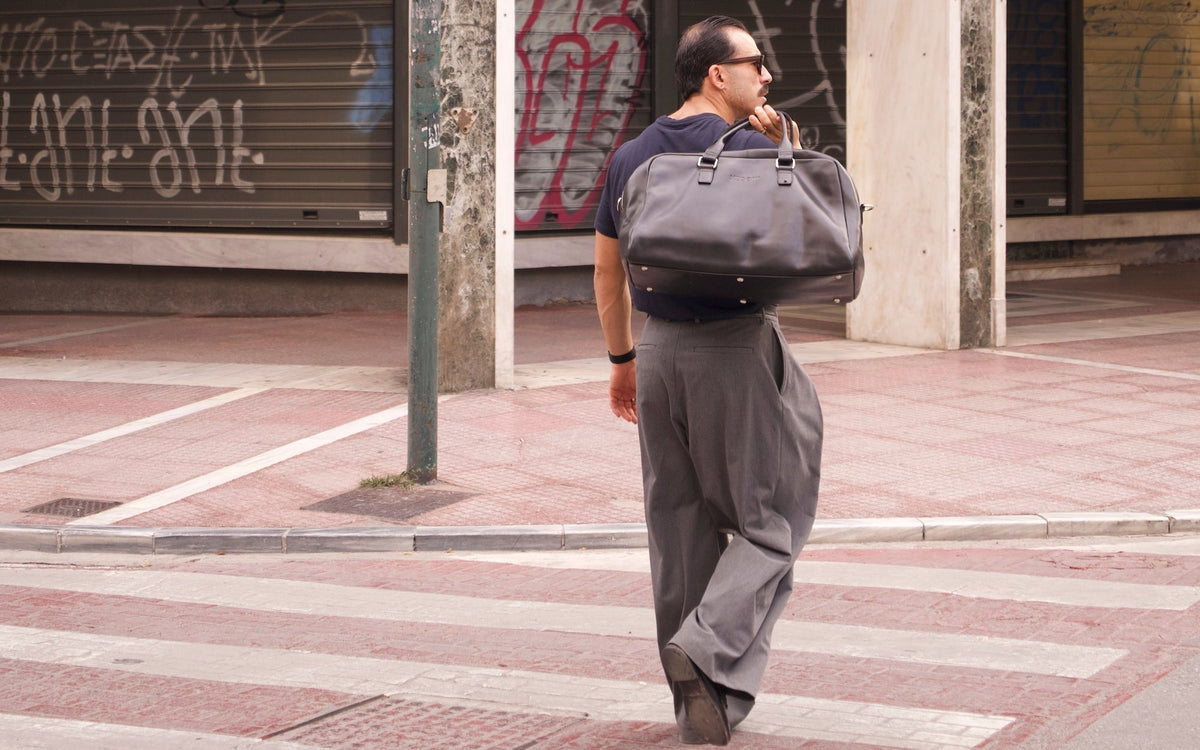
A bag with designated places answers that question permanently. The Valen Weekender is built around it: separate compartments for a charger, a passport, a notebook, a phone, a pen, an AirTag and AirPods, so the things you reach for on arrival were never inside the clothes in the first place. It is €219 and 1,600 g.
The caveat is real, though, and it is a matter of temperament rather than quality. If you pack differently every trip, a bag with a slot for everything starts to feel like it is giving you instructions. The Marent takes the other line: one generous space, a front zip pocket, side pockets, card slots and pen holders, and you find things by reaching. It is €189 and holds 35 litres against the Valen's 32.
Neither is the better bag. One of them suits a man who packs the same way every time and one suits a man who does not, and knowing which you are saves you a purchase.
The bag has to look the same at the end as the beginning
This is the part that is invisible when you buy and obvious on day two.
A bag spends most of a trip partly empty. Shirts come out, the laptop comes out, and what is left is a shape holding about half of what it held in your hallway. A structured bag at that point looks identical to a full one. An unstructured one looks deflated, and a deflated bag reads as end-of-trip no matter how good the leather is.
That is the whole practical case for structure, and we laid out the mechanics in weekender or duffel bag. It also has a cost worth stating: a bag that holds its shape cannot be folded flat, so it takes up its full volume in your house for the fifty weeks a year you are not travelling.
Where it goes when you sit down
Nobody thinks about this before buying and everybody deals with it on every trip.
You sit in a lobby, or at a table, or in a chair outside someone's office, and the bag has to go somewhere. A bag with a flat base stands beside the chair and looks deliberate. A bag without one leans against your leg, slides, and ends up on the floor on its side, which is the single least composed thing an expensive object can do in public.
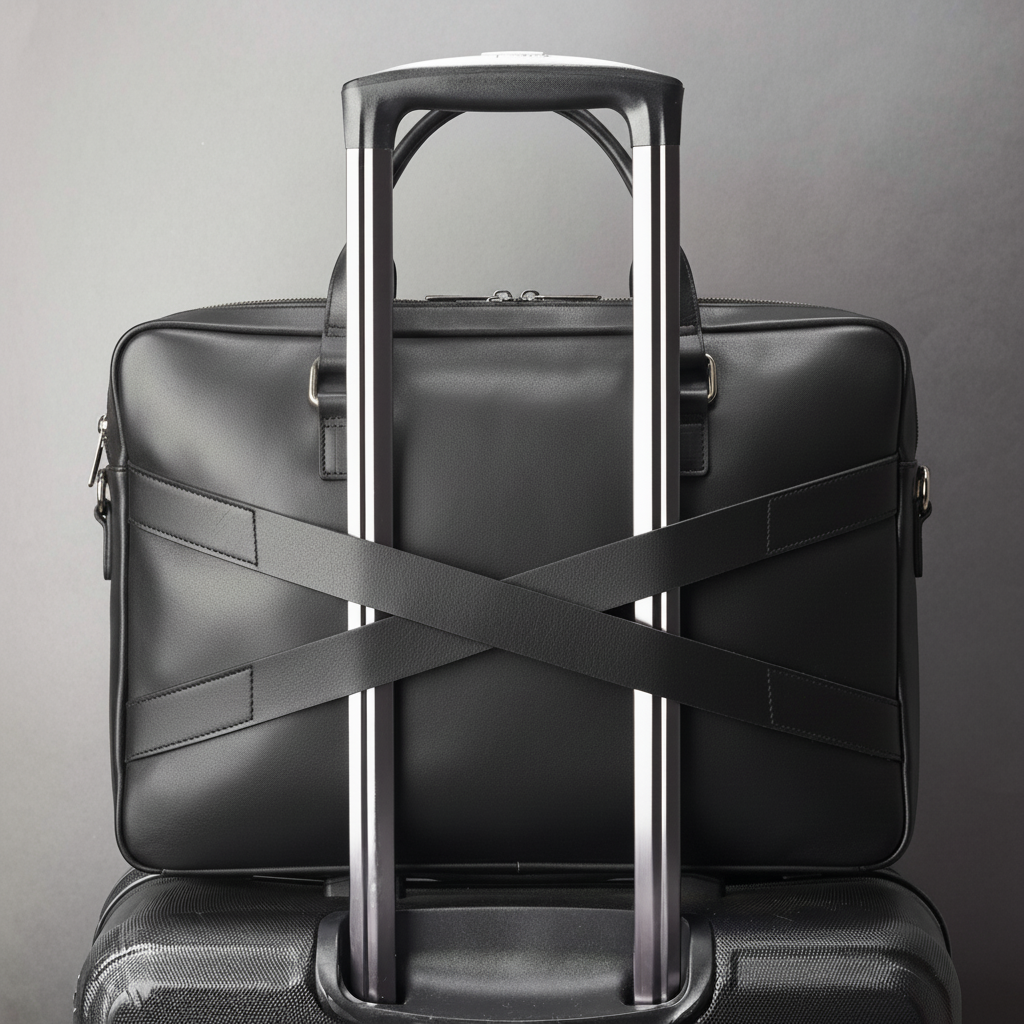
If you travel with a wheeled case as well, the same logic applies to whether the bag will sit on the case handle instead of in your hand. Among ours only the Sorel Briefcase lists a sleeve for that, at €169 and 1,200 g, which makes it the one to look at if you are usually pulling a case through a station. Neither weekender has one, and if that is how you travel then that is a real limitation of both.
What leather actually contributes, and what it costs
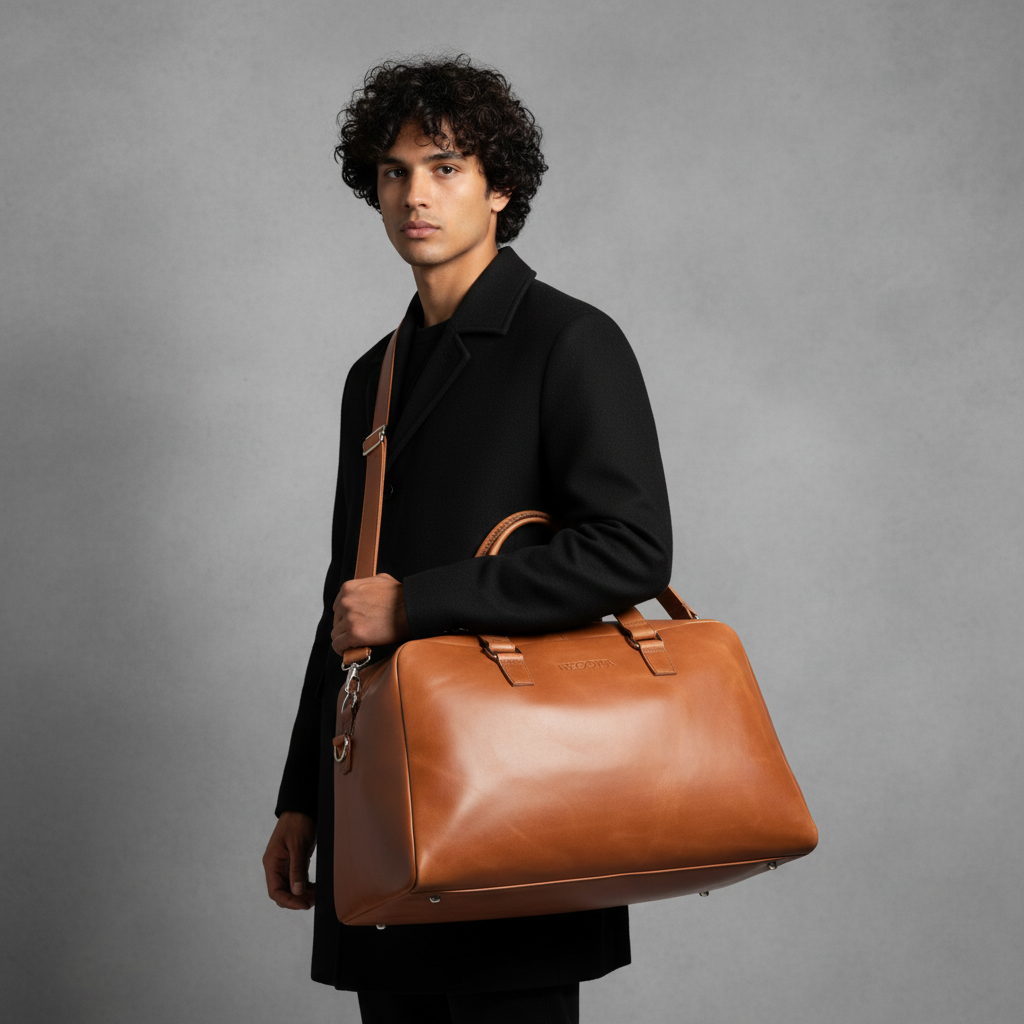
Leather earns its place here for one reason: it looks better at the end of a day than at the start of one, and almost no other material does. The corners burnish, the handle darkens where your hand sits, and the whole thing settles into the way you carry it. We were specific about what does and does not happen in does nappa leather develop a patina.
The honest cost is that leather does not recover from being crushed the way canvas does. A canvas bag that has been squashed under something relaxes back out. A leather one keeps a memory of it. That is an argument for buying structure rather than an argument against leather, but it is also why a leather bag wants to be the thing on top of the pile rather than under it. If you need a bag that can be abused and look fine, leather against canvas makes that case properly, including where canvas simply wins.
Two small things that do most of the work
Keep toiletries out of the clothes. Not for tidiness, but because the one genuinely unrecoverable arrival is the one where something has leaked. A proper wash bag with a wipeable interior is the cheapest insurance in travel: the Caldre is €59 and the Mori is €64.
And decide, while you are packing, which single object you will need within a minute of arriving. Put that one in an outer pocket. Almost every lobby rearrangement in the world is somebody looking for a phone, a pass or a notebook that went in last and ended up at the bottom.
The point
Arrival is not something you manage when you get there. It is something you packed for, in your hallway, days earlier, and by the time you are in the lobby the outcome is already fixed.
Which is oddly freeing. It means arriving well is not a performance you have to sustain. It is a decision you made once, about a bag, and then stopped having to think about. The register that bag carries while you do it is the subject of black or cognac, and the whole range is in the weekenders collection.