



Black or Cognac: The Only Colour Decision You Have
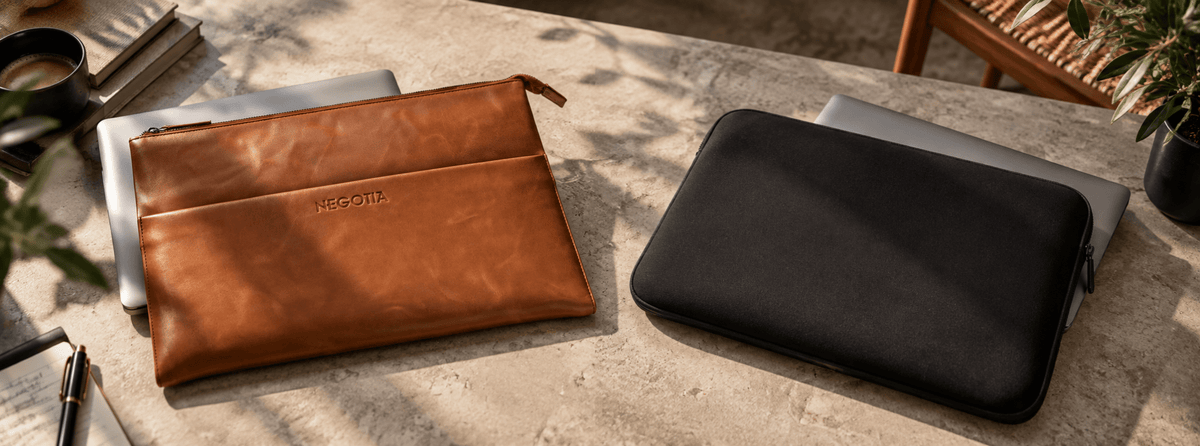
Every bag NEGOTIA makes comes in two colours. Black and cognac, nothing else, no seasonal shades and no limited runs. That is deliberate, and it means the colour question is the only one left once you have settled on a briefcase, a backpack or a weekender.
Most men answer it without thinking. They take the black one, because black is what a work bag is, and because choosing it requires no decision at all. The result is a cupboard of good objects that look like nothing in particular.
Black is still the right answer more often than cognac. That is worth saying first, because the rest of this argues the other way.
What black is actually for
Black disappears. That is its entire job and it does it better than any other colour. Against a charcoal suit, a navy overcoat, black shoes and a dark platform at seven in the morning, a black bag registers as nothing. Nobody looks at it. In the professions where being looked at is a liability, that is precisely the point.
So black is correct if you wear black or charcoal tailoring most days, if your shoes are black, if you work somewhere conservative enough that a visible choice reads as a statement, or if this is the only bag you intend to own. One bag has to go with everything, and black goes with everything by refusing to go with anything in particular.
The limit is the same quality described from the other side. A black bag will never be the reason someone asks where you got it. It has no opinion. If you are buying your first good leather bag and you want it to be the thing that quietly improves every outfit you own, black is not that bag.
What cognac does that black cannot
Cognac reads as a choice. It is the only one of the two that could not have been arrived at by default, and that is most of its value.
It also does real work. Navy, grey, olive, brown, denim, any of the mid-tone wools a modern business wardrobe actually runs on: cognac sits against all of them and warms them. Against navy in particular it is the better colour by a clear margin, which matters, because navy is what most men wear most of the time.
There is one hard constraint and it is not a style quibble. Cognac and black shoes do not work together. If you wear black shoes every day, a cognac bag will look like it belongs to somebody else's outfit, and no amount of conviction fixes that.
The shoes decide, not the bag
The useful question is not which colour you prefer. It is what is on your feet most mornings.
Brown shoes, cognac bag. Black shoes, black bag. That is very nearly the whole of it, and it settles the decision in about four seconds for most people.
The convention behind it is old and English: the City of London's "no brown in town", which held that brown belonged in the country and black belonged in the office. Menswear writing has spent the last twenty years dismantling that rule, correctly, and outside the most formal professions it no longer holds. What survives is the narrower and more useful half of it. Leather should agree with leather. Shoes, belt, bag and watch strap in the same family.
You can break it on purpose. A cognac bag with a navy suit and black shoes is a known and defensible look. But break it knowingly, because the alternative is not a style, it is just a mismatch.
They do not age the same way
Nappa leather does not change colour as it gets older. We have been direct about that in does nappa leather develop a patina: chrome tannage has less in it to darken, so what you actually get is burnishing at the corners, a slight sheen on the handle where your hand sits, and a silhouette that relaxes into the way you carry it.
Tone decides how much of that you ever see. On cognac the burnished corners and the darker grip show, and the bag begins keeping a record of where it has been. On black the same thing happens and almost none of it is visible. A five year old black bag looks like a black bag. A five year old cognac bag looks like yours.
Whether that is an argument for cognac depends entirely on whether you want an object that admits to being used. Some people want the record. Some people want the bag to look the same in year five as it did in week one, and for them black is the honest answer.
If you already own one
If the bag in your hallway is black, the next one is cognac. A second black bag is the same bag bought twice, and it will be chosen on specification alone, because the colour decision was already spent on the first one.
The exception is real though. If you travel in dark tailoring every week, into rooms where you would be the only person not wearing a navy suit, two blacks is not a failure of imagination. It is a correctly read brief.
The same logic runs underneath the format decision. A backpack and a briefcase say different things about the day you are having, which is the subject of backpack against briefcase for work, and material carries its own register, which is where leather against canvas comes in. Colour is the last of the three and the cheapest to get right.
How it sits in the range
Every model is made in both colours at the same price, so the decision costs nothing either way. The Sorel Briefcase at €169 and the Orden Briefcase at €139 come black or cognac. So do the Kova Backpack at €149, the Marent Weekender at €189 and the Mantle Sleeve 14" at €69.
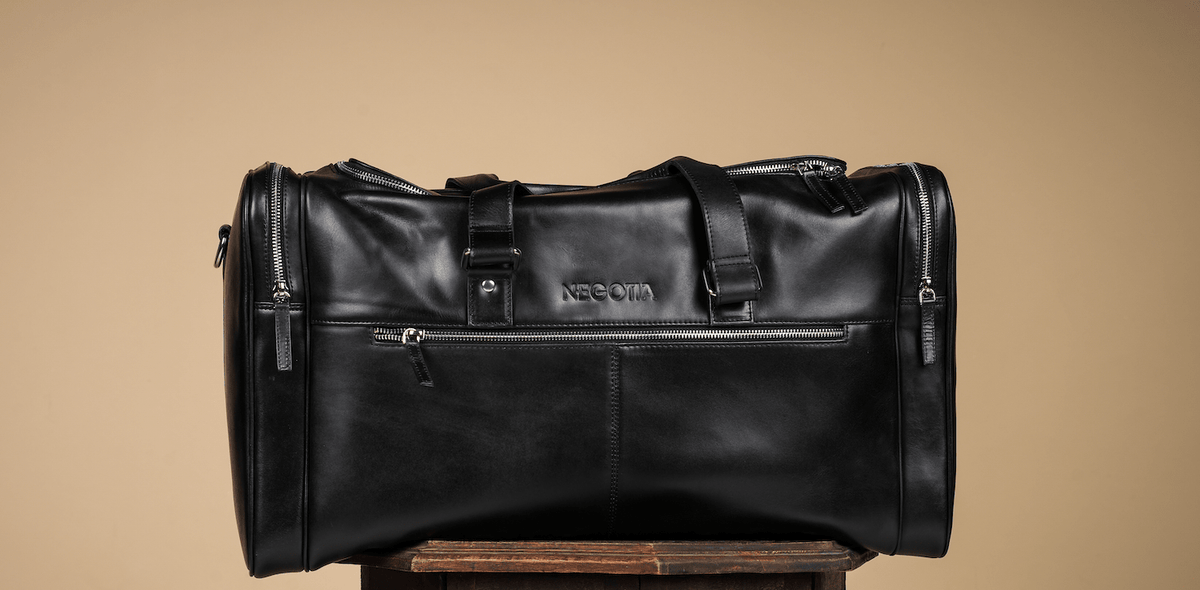
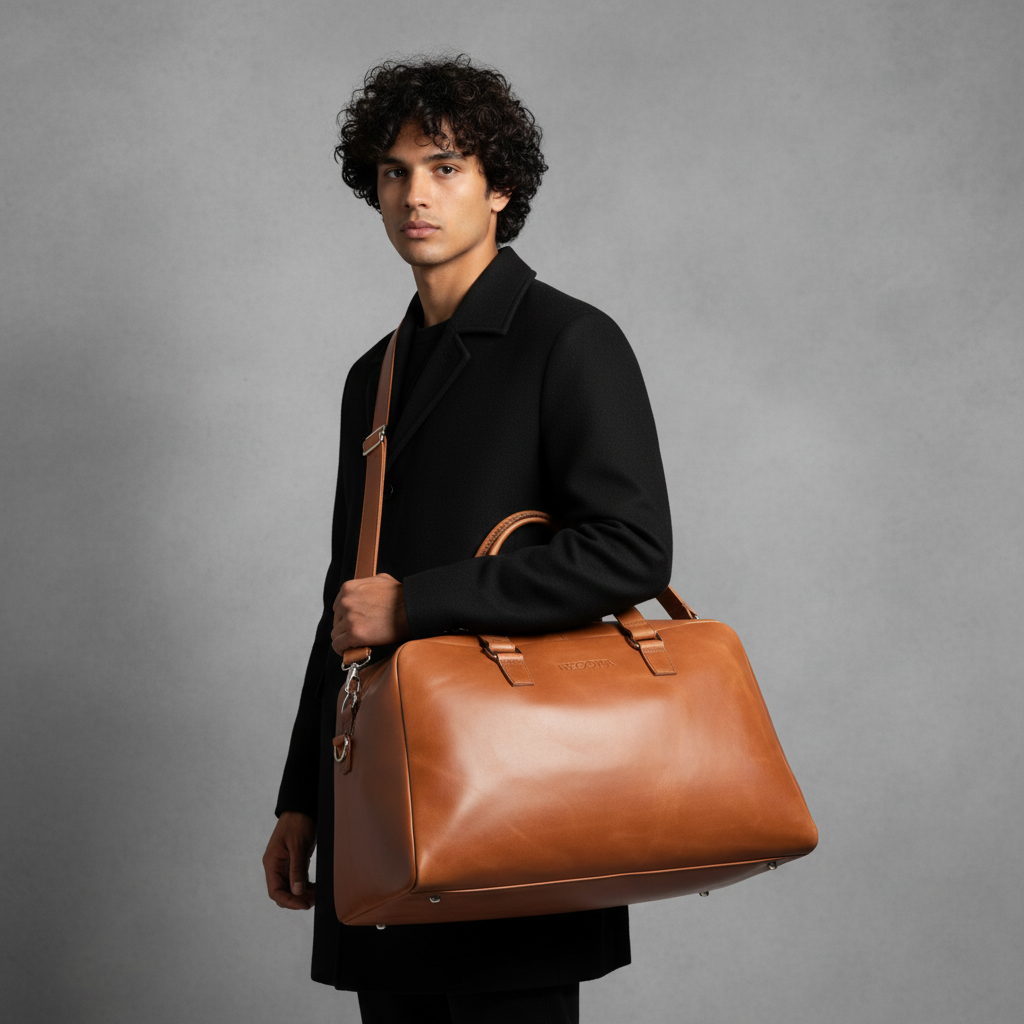
On the weekenders the two colours read most differently, because a bag that size is large enough for colour to be the first thing anyone sees rather than a detail. The Marent is 53 × 24 × 31 cm and 35 litres either way. In black it is a work bag that happens to hold a weekend. In cognac it is a travel bag that happens to hold a laptop. Same bag, same price, different register entirely.
The full range in both colours is in the men's leather bags collection.
The point
Black is the safer bag. Cognac is the more interesting one. The difference between a man who owns good things and a man who owns good things that look like his is usually just that he chose the second colour once.
Look at your shoes. Then buy accordingly.