



Does Nappa Leather Develop a Patina? What Actually Happens as It Ages
Not the way vegetable-tanned leather does. That is the honest short answer, and it is worth having before you buy, because a lot of the marketing photography around leather goods borrows the look of a different material entirely.
Nappa leather still changes with use. It just changes in a quieter, less photogenic way, and knowing what to actually expect saves you from either worrying about normal wear or waiting for a transformation that was never coming.
What "patina" actually means
Patina is what happens when a hide's own tannins darken and deepen in colour as they react to light, air and the oils from your hands. It is a property of how the leather was tanned, not of how well it was made. We covered the mechanism properly in vegetable-tanned vs chrome-tanned leather: vegetable tannins sit in the hide and visibly darken over months and years. Chromium salts, which is what tans nappa, do not work that way. There is less in the tannage to darken, so the leather does not develop colour the same way.
That is not a flaw in nappa. It is a different material doing a different job. But it does mean that if you are picturing the deep amber transformation you have seen on a vegetable-tanned belt or a decades-old saddlebag, a nappa bag will not get there, however well you treat it.
What nappa actually does over time
Four things happen to a well-made nappa bag with regular use, and none of them is a colour change of the kind vegetable-tanned leather shows.
| What you'll see | Why it happens |
|---|---|
| Corners and edges develop a slight sheen | Repeated handling burnishes the surface where it gets touched and rubbed most, mainly the base corners and the handle grip |
| Fold lines soften and the leather drapes more | The fibre structure relaxes with flexing, the same way a new jacket loosens at the elbows |
| Handles and straps darken very slightly at the grip points | Skin oils absorb into the surface finish where contact is most frequent |
| The overall silhouette relaxes | A structured bag softens from a stiffer, boxier new shape into one that has settled to how you actually carry it |
Put together, this reads as a bag that looks used rather than new. It does not read as a bag that has changed colour, developed deep tonal variation, or taken on the honey-brown depth people associate with patina. That is a different, subtler kind of ageing, and it is the one nappa actually delivers.
Finish decides how visible any of this is
Not all nappa behaves identically here, and the difference comes down to the surface finish rather than the tannage. We set out the ten-second water-drop test for this in how to care for a leather bag: aniline nappa is dyed through with the pores left open, so it shows contact and handling more readily. Pigmented nappa has colour bound to the surface, so it resists marking and shows almost none of this burnishing effect, for better and for worse. A pigmented bag will look closer to day one for longer. It will also never develop the soft, lived-in surface an aniline or lightly pigmented nappa can.
Grade matters here too, separately from finish. Nappa is a tannage description, not a grade, and grade is what decides how the surface itself is structured underneath the finish. A full-grain nappa has the natural grain intact, so the fibres respond to flexing and handling in a way that shows as the subtle burnishing described above. A corrected or heavily buffed grain has had that natural surface sanded and refinished, so it resists marking more but also has less capacity to develop any texture at all. Full-grain ages. Corrected grain mostly just wears out.
Damage or ageing: how to tell
Most of the questions people actually have are not about patina in the abstract. They are about a specific mark on a specific bag, and whether it means something has gone wrong.
- A light scuff that softens when you rub it with a finger. Normal. The finish is flexible and this kind of surface disturbance evens out. This is ageing, not damage.
- A cut or scrape that has gone through the finish into the leather beneath. Permanent, and no amount of conditioning brings it back. This is damage, and it is worth knowing the difference before you reach for a product to try to undo it.
- A slight darkening at the corners and grip points after months of use. Normal, and it is the sign described above. It usually stops progressing once it reaches the contact points and does not spread across the whole panel.
- A dull, dry, papery feel, or pale tightness along fold lines. This is the leather telling you it wants conditioning, not a sign of neglect that already happened. Our care guide covers when conditioning is actually due, which is less often than most advice suggests.
- Colour change across a whole panel rather than at contact points, especially after strong sunlight. This is UV fading, which affects both tannages, and it is one of the few kinds of change that is closer to damage than character, since it is uneven and does not reverse.
The general rule holds up well in practice: if the change is concentrated where your hands and the ground actually touch the bag, it is the bag ageing normally. If it is a hard line into the material or an uneven patch from heat or sun, it is damage, and no amount of patience will turn it into character.
If you want the dramatic version, buy the other tannage
This is worth saying plainly, because it is the honest answer rather than the convenient one. If what you actually want is a bag that visibly transforms over five years, deepens in colour and tells a story the way an old saddle does, nappa is the wrong material for that brief. That is vegetable-tanned leather's job, and it does it at the cost of arriving stiffer, needing a longer break-in, and being fussier about water. Our comparison of the two tannages sets out that trade honestly.
Nappa's job is different: soft from the day it arrives, consistent across colours including black, and a good deal more relaxed about rain. What it gives up in dramatic transformation, it makes up in being genuinely comfortable to carry from the first week rather than the fiftieth.
Where to see it in the range
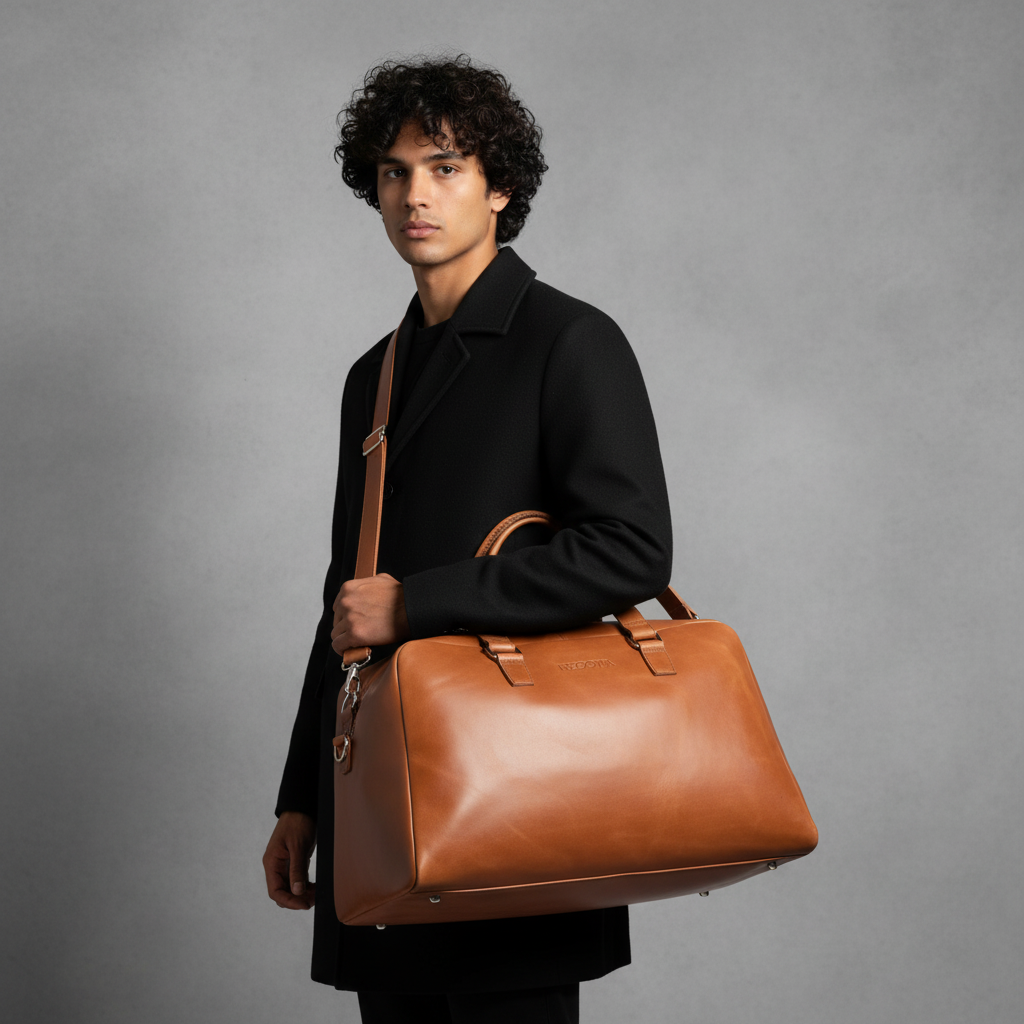
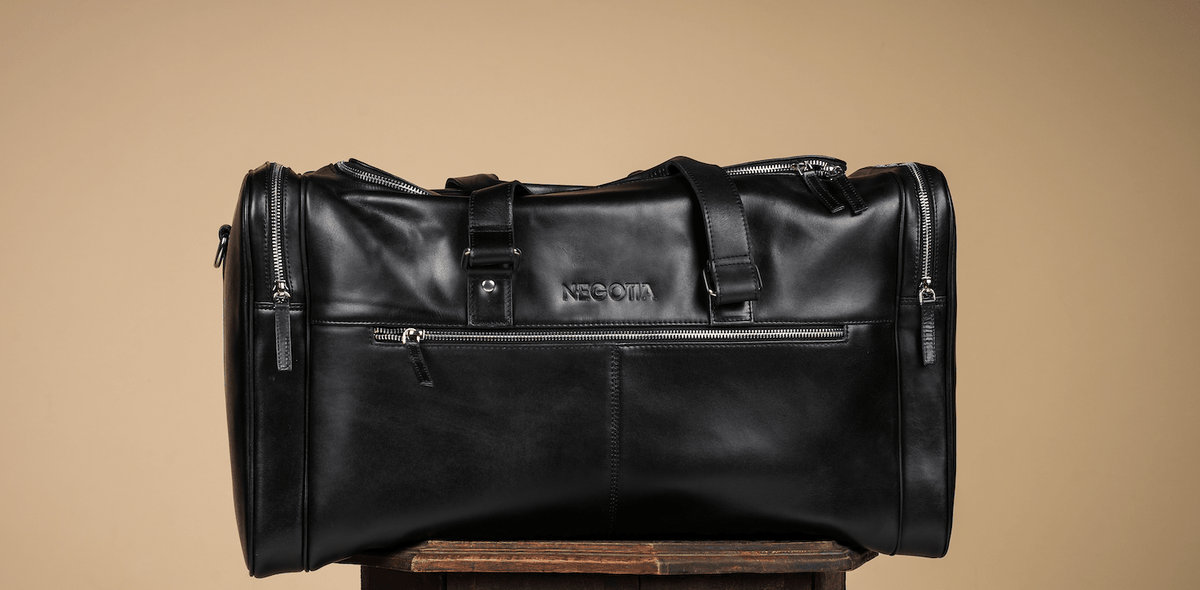
If you want a bag where this kind of ageing is most visible, look at full-grain leather specifically rather than nappa alone. The Valen Weekender states full-grain Nappa leather on its own product page, and at 49 × 23 × 28 cm with a 32 litre capacity it is built to be carried hard rather than kept for occasions, which is exactly the kind of use that lets this sort of ageing show. It is €219.
For an everyday piece where consistency matters more than visible character, the Mantle Sleeve 14" and the Notion Folio 14" are nappa leather without a stated grade on the product page, so treat them as leather that will soften and burnish gently at the edges rather than develop the deeper texture a stated full-grain piece will show. Both are built around a padded 14 inch laptop compartment, at €69 and €79.
The full range, with materials and dimensions listed on every product page, is in the bags collection.
The point
Nappa leather ages. It just does it the way a well-worn wallet does rather than the way a tan line does: quietly, at the edges and grip points, by getting softer and slightly burnished rather than by changing colour. If a bag arrives looking too perfect to actually use, that is backwards. The bag is meant to look like yours after a year, not like it did in the product photo.
For the routine that helps it get there without damage, how to care for a leather bag covers what is actually worth doing, which is less than most advice implies.