



What Is Nappa Leather? A Plain Explanation
Nappa describes how a leather feels, not how good it is. That is the short answer, and it is worth knowing before you spend money, because the word appears on product pages at every price level and it is not a quality rating.
Here is where the term comes from, what it does and does not tell you, and the three questions worth asking a seller.
Where the name comes from
Nappa is named after Napa, California. The process was created there by Emanuel Manasse, a German tanner working for the Sawyer Tanning Company, and was originally sold as “Nap-a-tan”, a waterproof shoe leather. What the word means today is quite different: a soft leather used for bags, clothing and car interiors.
The part that matters is what happened to the word afterwards. It stopped belonging to anyone. As the reference entry on Napa leather puts it, it is a generic term in the leather field with no distinct test for characterisation. There is no standard a hide must meet to be sold as Nappa, and nobody checking. Any tanner can use it.
That is not a scandal. Plenty of useful words work this way. But it does mean the word carries less information than most buyers assume it does.
Nappa is not a grade
This is the confusion worth clearing up, because it is the one that costs people money.
Leather is described on two separate axes, and Nappa sits on only one of them.
| Axis | Terms you will see | What it tells you |
|---|---|---|
| How the hide was tanned and finished | Nappa, vegetable-tanned, suede, nubuck, patent | How it feels and behaves |
| Which layer of the hide was used | Full-grain, top-grain, corrected, split, bonded | How durable it is and how it ages |
A leather can be Nappa and full-grain. It can equally be Nappa and heavily corrected. Both are legitimately Nappa. So a listing that says only “Nappa leather” has told you about the feel and nothing about the grade, and the grade is the axis that decides how the bag looks in five years.
If a product page names Nappa and stops there, that is exactly what to ask about. Our leather laptop bag buying guide explains what the grades actually mean and how they age.
What Nappa does tell you
Something real, just narrower than people expect.
- It is smooth leather. The grain side faces outward, so it is not suede or nubuck.
- It is soft immediately. Nappa does not need breaking in the way a thick vegetable-tanned hide does. What you feel in the shop is roughly what you get.
- It is typically chrome-tanned. The leather care house Collonil defines Nappa as particularly soft, chrome-tanned smooth leather. Chrome-free versions exist and can feel much the same, but chrome tannage is the norm.
- It traditionally comes from finer hides. Calf, lamb and kid goat, which are naturally soft. Modern usage is broader and plenty of Nappa is cowhide.
Soft from day one, and what you trade for it
The tannage is the reason Nappa feels the way it does, and it comes with a trade worth understanding.
Chrome-tanned leather is supple from the start, takes a wide range of colours and shrugs off water marks reasonably well. Vegetable-tanned leather starts firm, breaks in slowly and develops the deep patina people associate with heritage goods. Neither is better in the abstract. They suit different objects.
For something you carry every day and want comfortable on the first morning, soft is the point. For a belt or a knife sheath, firm is the point. A weekender that arrives stiff and stays stiff for a year is not a better bag, it is the wrong leather for the job.
The finish is where the real differences hide
Within Nappa, the surface treatment varies more than the name suggests. Aniline Nappa is dyed through with the pores left open, which looks superb and marks easily. Pigmented Nappa has colour bound to the surface, which is far more resistant to dirt and sun but less breathable. Most bags sit somewhere between the two.
This matters mostly after you buy, because it changes how the bag should be looked after. We covered the practical side of that, including a ten-second test to work out which one you own, in how to care for a leather bag.
Three questions worth asking
If a seller says “Nappa” and nothing else, these three close the gap.
- What grade is it? Nappa plus full-grain is a different product from Nappa plus corrected, at the same softness.
- How is it finished? Aniline or pigmented decides how it copes with rain, dirt and sunlight.
- Which hide? Calfskin, lambskin and cowhide differ in weight and in how much abuse they take.
A seller who can answer all three is telling you they know their supplier. A seller who cannot has given you an answer of a different kind.
What NEGOTIA uses
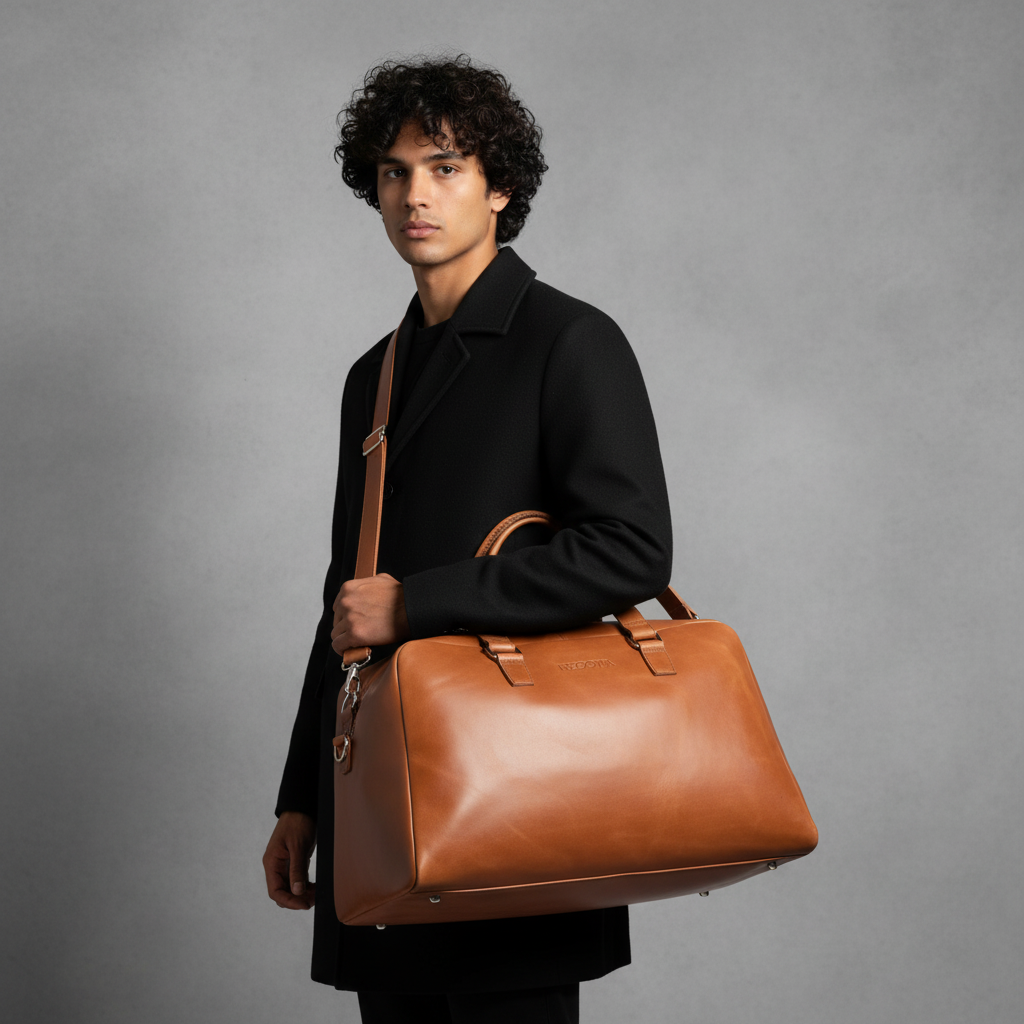
Our product pages state Nappa leather across the range, and the Valen Weekender states full-grain Nappa on its own page. Where a specific grade is not stated on the page, we would rather say Nappa and leave it there than claim something we have not confirmed, which is the same standard we are asking you to hold other sellers to.
Dimensions, weight and materials are listed on every product in the bags collection, so you can check before you commit rather than after.
The short version
Nappa tells you a bag will feel soft and smooth. It does not tell you the leather is good, durable, or worth the price. For that you need the grade, the finish and the hide. Ask for those three and the word Nappa becomes useful information instead of decoration.