




Laptop Sleeve vs Folio vs Briefcase: What Actually Protects Your Laptop
A sleeve, a folio and a briefcase all claim to protect a laptop. They do it in different ways, and the differences matter more than the price gap between them suggests.
The short version: a sleeve gives you the closest, lightest layer of padding and nothing else. A folio adds flat organisation without adding bulk. A briefcase surrounds the laptop with volume and separates it from everything else you carry. If your laptop travels alone, a sleeve or folio is usually enough. If it travels with a charger, a water bottle, a notebook and whatever else the day requires, a briefcase protects it better, because most laptop damage in a bag comes from the other things in the bag.
What you are actually protecting against
Before comparing formats, it helps to be precise about the failure modes. They are not the same, and no single format handles all of them equally.
- Corner and edge impact. A laptop dropped onto a hard floor almost always lands on a corner. That is where the chassis is stiffest and where the force concentrates. Padding helps here only if there is padding at the corner, and only if the laptop is not pressed flat against the outer wall.
- Compression. A bag put down hard, wedged under a train seat or stacked under something heavier. This is the failure mode that cracks screens, and it is the one people underestimate.
- Point pressure from your own contents. A charger brick, a set of keys or a pen lying flat against a screen inside a single-compartment bag. Over months this does more damage than any single drop.
- Abrasion and everyday wear. Scuffed lids and worn corners. Slow, cosmetic, and the easiest thing to prevent.
- Water. Rain on a walk from the car park, a spill on a desk. Worth being honest about: none of these formats is waterproof.
Notice that only the first two are dramatic. The third is the one that quietly ruins machines, and it is the one that separates a briefcase from a sleeve.
The sleeve: closest protection, nothing else
A sleeve is a padded shell cut to the laptop. Nothing about it is complicated, which is exactly the point. It adds a few millimetres of padding on every face, it stops abrasion completely, and it takes the edge off a knock. Because it fits closely, the laptop cannot slide around inside it and build up momentum.
What a sleeve does not do is create distance. On a serious drop, a thin padded layer compresses and the corner still meets the floor. It also carries nothing beyond the laptop and a couple of small items.
The Mantle Sleeve 14" is a fair example of the format done properly: 35 x 25 x 4 cm, 425 g, a padded compartment for laptops up to 14 inches, plus a dedicated compartment for a Magic Keyboard and a pocket for a phone or mouse, closed with YKK zips. Full-grain Nappa leather outside, cotton inside. That is the whole proposition. It is the lightest way to protect a machine, and if you already carry a larger bag, it is often the only thing you need to add.
The folio: the same protection, better organised
A folio is a sleeve that has been asked to do a day's work. Same flat construction, same padded laptop compartment, but with structured space for the documents, notebook and small items that would otherwise sit loose against the screen.
This is worth stating plainly, because it is the point most comparisons miss: at the same size, a folio does not protect a laptop better than a sleeve. The Notion Folio 14" and the Mantle Sleeve share exactly the same external footprint, 35 x 25 x 4 cm, and the same 425 g. The difference is not padding. It is that the folio adds a front document pocket, a compartment for a notebook or passport, a phone pocket, two pen holders, a card slot and an AirTag compartment. You are buying order, not armour.
Where a folio does protect better is indirect. Pens have a loop. Cards have a slot. Nothing hard is lying flat against the lid. That removes the point-pressure problem, which over a few years is a real gain.
If your laptop is larger, the Plenum Folio runs 40 x 28 x 4 cm at 485 g with a padded compartment for laptops up to 16 inches, space for a notepad and a pen loop. It is the leaner of the two folios: fewer divisions, less to fill, the same flat profile.
The briefcase: volume, separation and standoff
A briefcase changes the geometry. Instead of a flat shell around the laptop, you get a structured bag with depth, and the laptop lives in its own padded compartment inside it.
Two things follow from that. First, the laptop is separated from everything else you carry, so the charger cannot press into the lid and the keys cannot scratch it. Second, the surrounding volume and the bag's own structure absorb energy before it reaches the machine. A briefcase set down heavily behaves very differently from a sleeve dropped on a tiled floor.
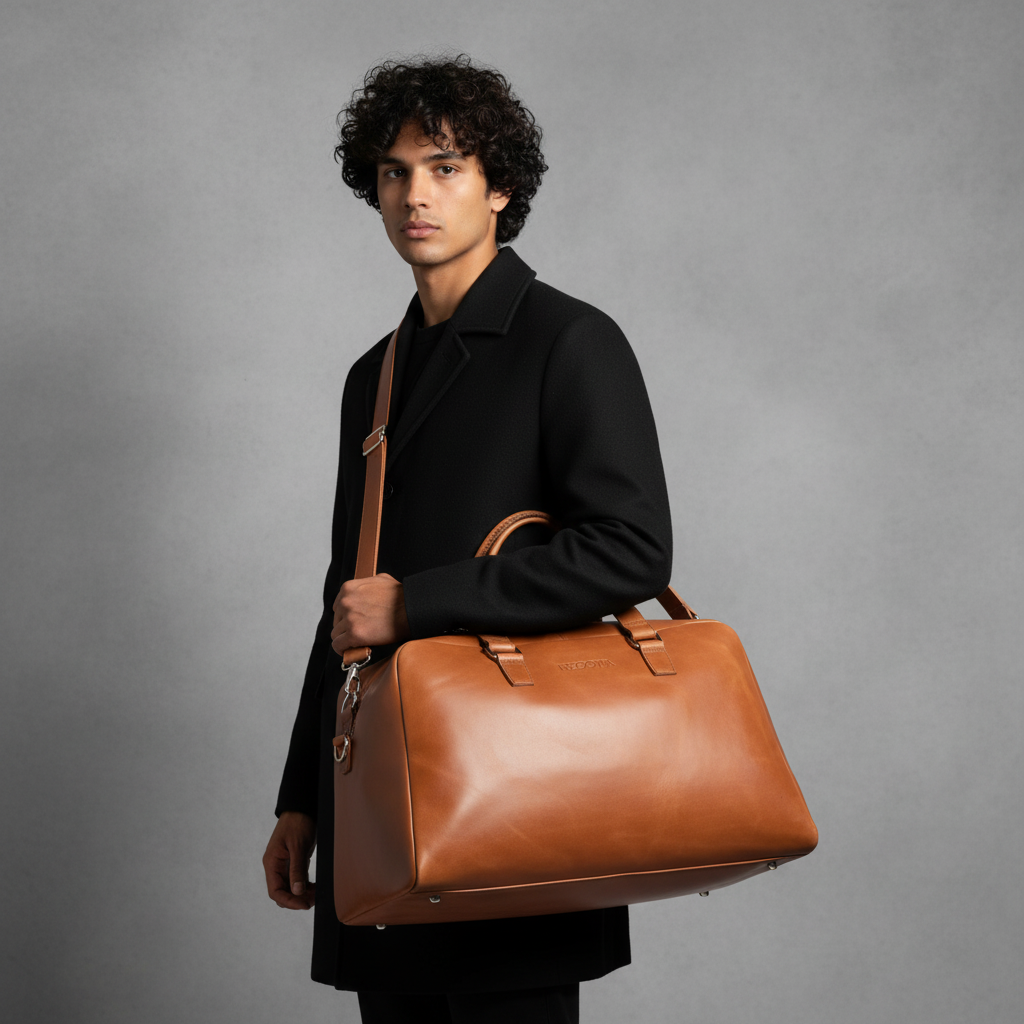
The trade is weight and bulk. The Orden Briefcase is 42 x 30 x 10 cm and 1,560 g empty, with a padded compartment for laptops up to 16 inches, a separate tablet compartment, a magnetic front pocket, a hidden rear zip pocket, a phone pocket, two pen holders and three card slots, plus a detachable adjustable shoulder strap. That is roughly three and a half times the weight of the Mantle Sleeve before you put anything in it.
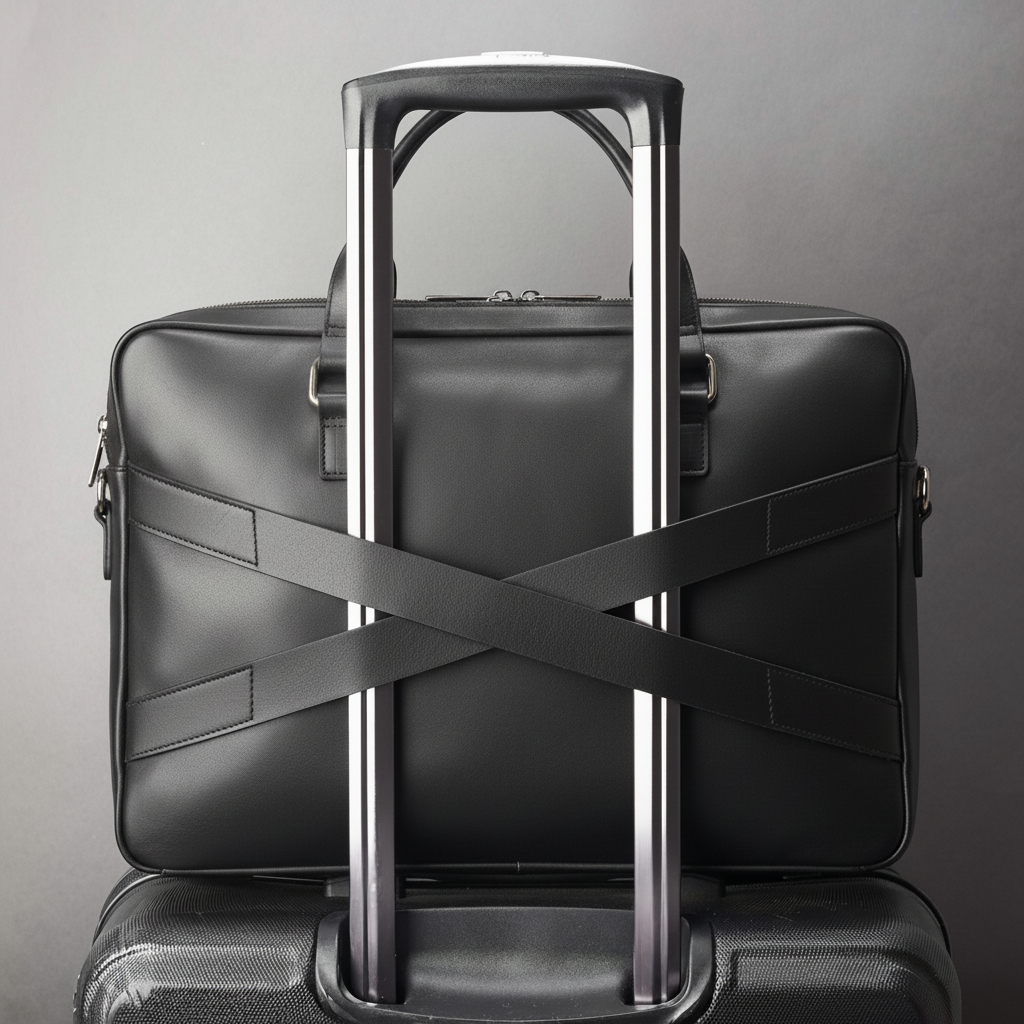
The Sorel Briefcase takes the same 42 x 30 cm face but runs 8 cm deep at 1,200 g, with a padded 16-inch laptop compartment, a tablet compartment, a front zip pocket, an internal zip pocket and a luggage sleeve that slides over a suitcase handle. Slimmer, lighter, and the better of the two if you travel by air often enough for the luggage sleeve to earn its place.
Fit matters more than format
A well-fitted sleeve protects better than a badly fitted briefcase. If there is enough room for the laptop to move, every knock becomes an impact, and padding cannot help with momentum it did not stop.
This is why the stated size matters, and why screen size alone is not enough to go on. A 14-inch laptop from one manufacturer can be noticeably wider than a 14-inch laptop from another. Measure the machine before choosing anything: our guide on how to measure your laptop for a sleeve or case covers the method in a couple of minutes, and if you are on a Mac, the MacBook sleeve size guide lists the current models against sleeve sizes directly.
Using two of them together
Sleeve and briefcase are not mutually exclusive, and combining them is the most protective arrangement available without buying a hard case.
It is worth doing when the laptop leaves the bag often during the day, so it is still protected on the desk, in a locker or in a hotel room. It is also worth doing if your bag has no dedicated laptop compartment at all, which is true of most non-work bags.
It is not worth doing inside a briefcase that already has a padded compartment sized for your machine. You gain very little and add real bulk, and forcing a sleeved laptop into a compartment cut for a bare one puts pressure on the very thing you are trying to protect.
Choosing by how you actually move
| How you carry | Best format | Why |
|---|---|---|
| Laptop only, short walk or car to desk | Sleeve | Lightest real protection, no wasted volume |
| Laptop plus documents and a notebook | Folio | Keeps hard items off the lid without adding depth |
| Full day out: charger, bottle, notebook, cables | Briefcase | Separation from your own contents, and volume around the machine |
| Frequent air or rail travel | Briefcase with a luggage sleeve | Rides on the suitcase, off the shoulder |
| Laptop inside a bag with no laptop compartment | Sleeve, inside that bag | Creates the compartment the bag is missing |
| Laptop moves in and out all day | Sleeve plus a briefcase | Protected in the bag and out of it |
A note on materials
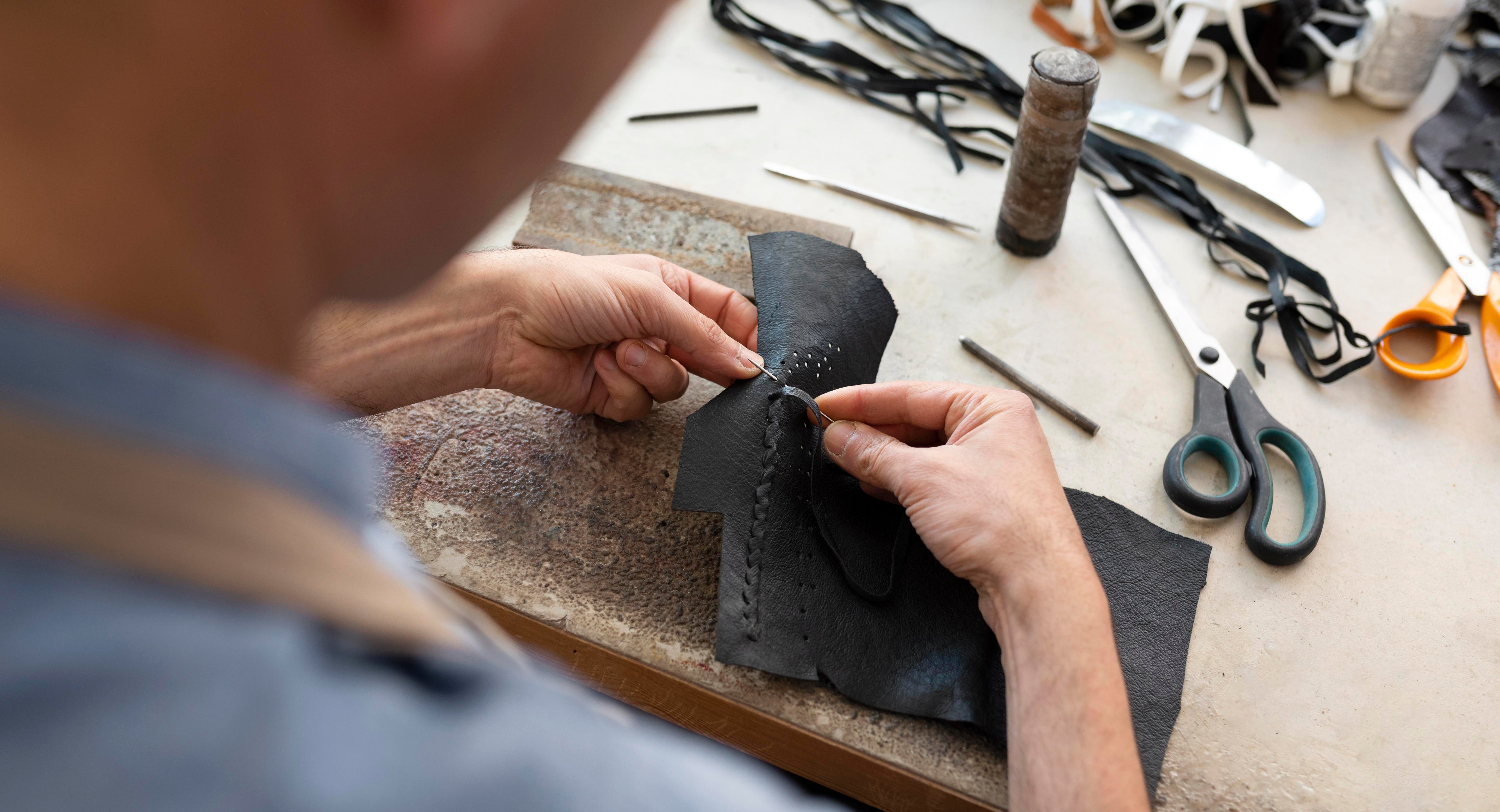
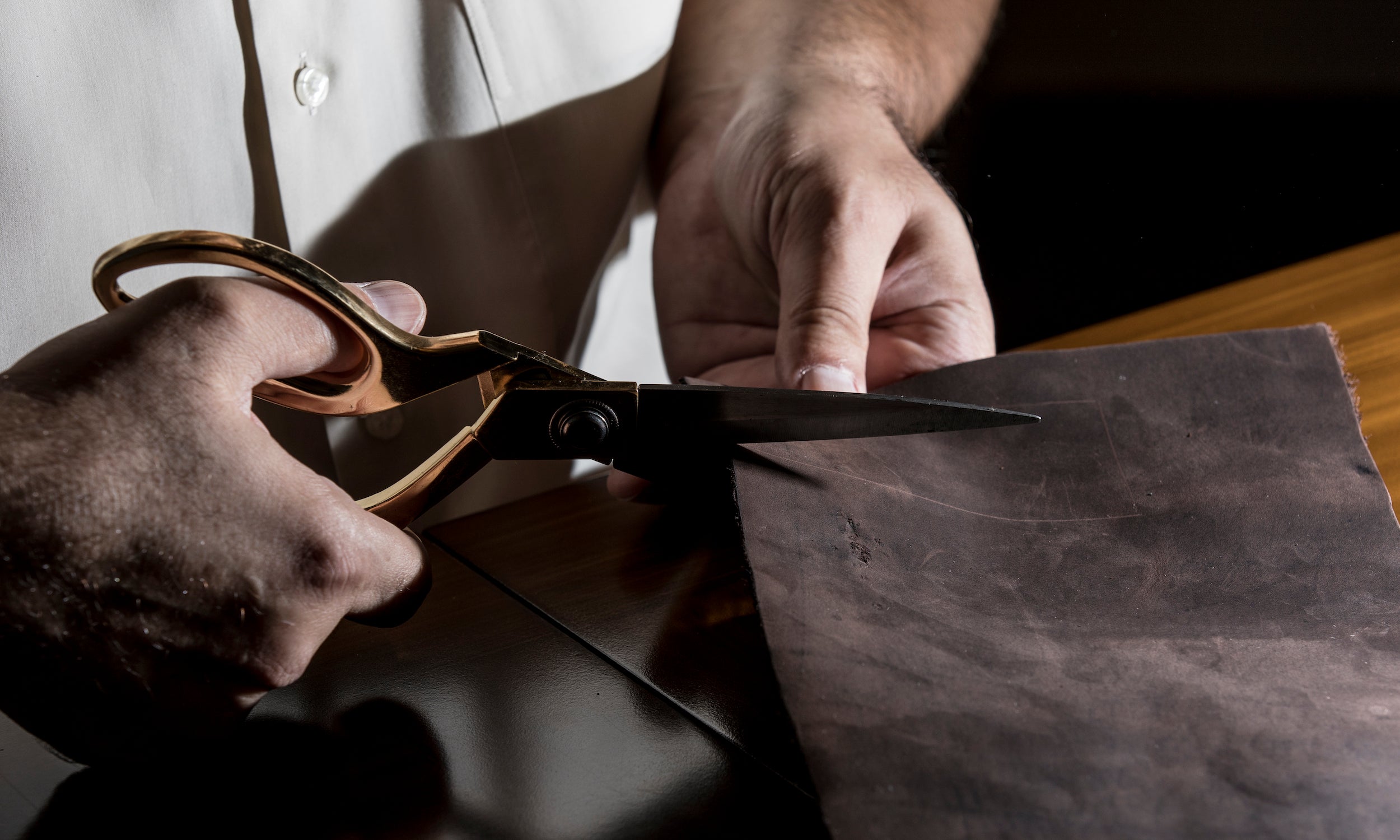
Padding does the protecting. The outer material decides how the thing ages and how much abuse it shrugs off before it looks tired. Full-grain leather is not chosen for impact resistance, it is chosen because it takes scuffs without failing and because the surface improves rather than degrades. All the pieces above use full-grain Nappa leather with a cotton interior and YKK zips, which is the combination that tends to still look right after a few years of daily use.
Two honest limits. Leather handles light rain but is not waterproof, so in real weather the laptop should be in a closed compartment and the bag should not be left standing in it. And zips enclose better than a magnetic flap, which is worth remembering if you carry an open-topped bag in a downpour.
The decision, in one line
Match the format to what else you carry, not to the laptop. The laptop only needs a padded compartment that fits it. Everything else you put in the bag is what decides whether that is enough.
If you are still weighing up a larger bag, the leather laptop bag buying guide goes deeper on leather quality, layout and carry comfort, and the full range sits in the bags collection.


