



Where a Bag Tells the Truth About Itself
Nearly every leather bag in Europe is sold with the same vocabulary. Premium. Handcrafted. Genuine leather. The words have been used so evenly across so many price points that they have stopped carrying information, and a buyer reading a listing has almost nothing to go on.
There is a way through this, and it comes from thinking like someone trying to save money rather than like someone trying to spend it.
If you are making a bag to a price, you cut cost where it will not show in a photograph. Nobody has ever decided against a bag because of its lining. So the cuts go inward and downward, into the places the camera does not point: the inside faces, the underside, and the cut edges. Which means those are exactly the places where a bag tells you the truth about itself.
The edges, which are the most honest surface on a bag
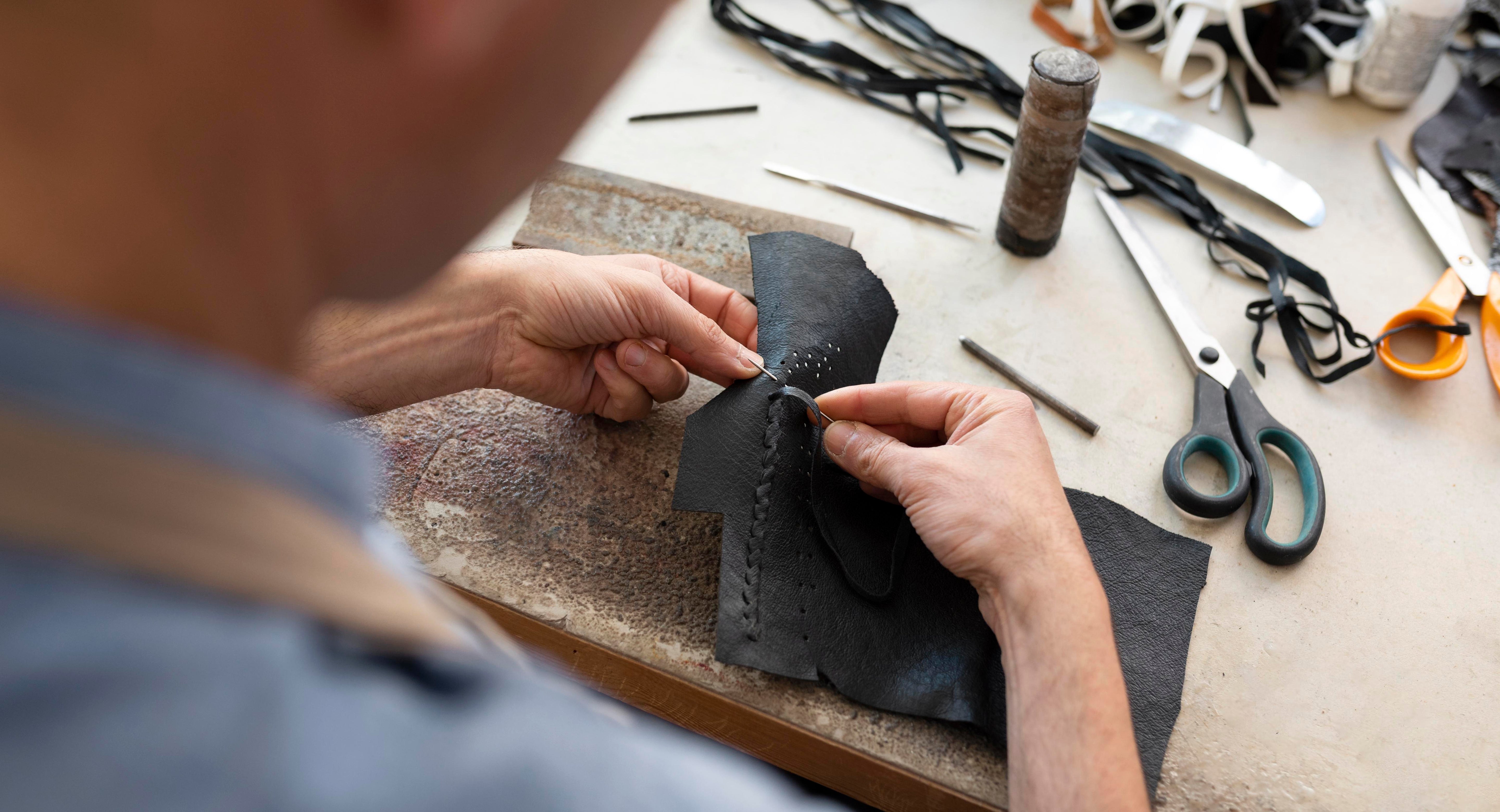
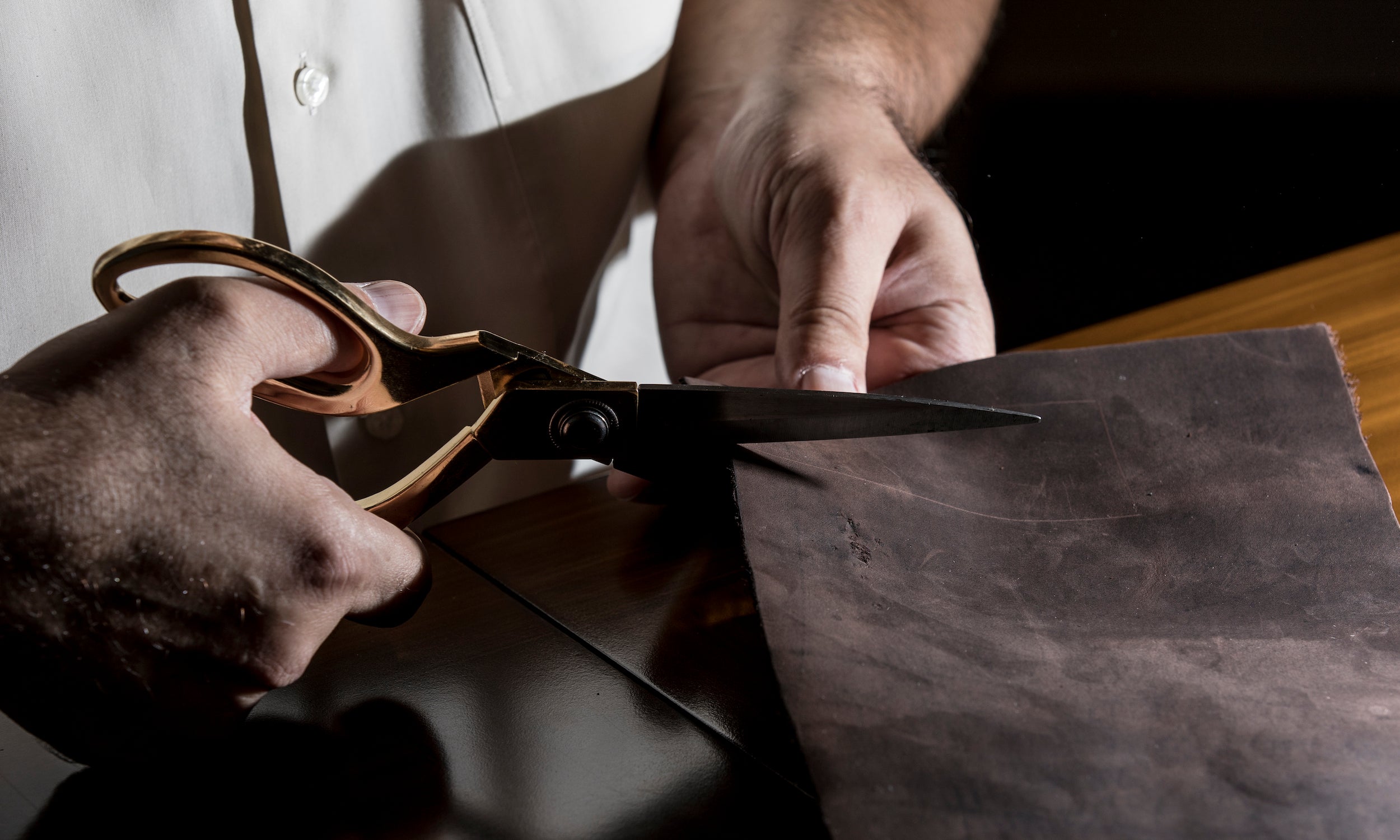
Leather has to be cut, and a cut edge is raw. What happens to it next is one of the clearest signals available, because finishing an edge properly is slow and almost entirely invisible in a product shot.
A folded edge, where the leather is turned under and stitched, is the most work and the most durable. A painted and burnished edge, built up in layers and polished smooth, is the common premium approach and holds up well. A raw edge left as the knife made it is the cheapest, and on a bag that will be handled every day it is the place wear starts.
Run a thumb along the edge of a strap where it meets the body. If it is smooth and slightly rounded, somebody spent time there. If it is square and fibrous, they did not. We do not state edge finish on our own product pages, which means you should not take our word for it either; look at the photographs at full zoom, where it is usually visible even when it is not described.
The lining, which is cost with no payoff
A lining is the purest test of intent in bag making, because it is the one component that costs real money and returns nothing at all on a product page.
Polyester lining is cheap, light and slippery, and it is what most bags in most price brackets use. Cotton costs more, is heavier, and will not photograph differently in any way a customer could perceive. A maker who specifies it has decided that the inside of the bag matters to the person who owns it rather than to the person browsing it. Ours is cotton, across the range, and it is one of the few claims we make that nobody could verify from the images.
The same logic covers the back panel of a laptop compartment. Padding is a material cost, it adds weight, and in a photograph a padded compartment and a flat divider look identical. Every bag we make is built around a padded compartment rated to a 16 inch machine. A listing that says "laptop compartment" without saying padded is usually describing a divider, and that distinction is the whole of whether your screen survives being set down hard.
The zip, because it is the part that fails first
Zips are used more than any other component and under more load, which makes them the usual cause of death for an otherwise sound bag. They are also cheap to downgrade and nearly impossible to assess from an image.
This is why named hardware matters, and it is worth being precise about why. A named zip is not proof that a bag is good. What it tells you is that the maker was willing to be held to a specific component rather than leaving themselves room. Ours are YKK throughout. A seller who describes a bag in four paragraphs of adjectives and never names a single component has made a choice about what they want you to be able to check.
What is not a tell, despite being treated as one
Thickness. Thicker leather is not better leather; it is heavier leather, and above a certain point it stops being suitable for a bag that has to fold anywhere. A thick hide on a weekender is a styling decision, not a quality one.
Stiffness out of the box. A bag that arrives rigid may be well made or may be heavily finished to hide a corrected surface. Softness on day one is a property of the tannage rather than of care taken, which we set out in what is nappa leather. Nappa is a description of how the hide was tanned, not a grade and not a quality rating.
And price, which correlates with all of this far more loosely than anybody would like. Plenty of the cost in an expensive bag is distribution, marketing and the shop it sits in. None of that reaches the edges or the lining.
What grade actually means, and when to ask
Grade is a separate question from tannage and it is the one most often fudged. A listing that offers only "genuine leather" or "real leather" is using the weakest true statement available, and it is usually weak on purpose.
Our own practice is to name a grade only where the product page states one. The Valen Weekender states full-grain nappa, at €219. The rest of the range we describe as nappa leather and make no grade claim, because we would rather say less than say something we cannot stand behind on every unit. If a seller will not answer the grade question directly, that reluctance is itself the answer.
What grade changes in practice is how the surface ages rather than how long the bag lasts. A full-grain surface develops the burnishing described in does nappa leather develop a patina. A corrected surface resists marking better and has less capacity to develop any character at all.
Four places, two minutes
Edges, lining, zips, padding. All four are assessable in about two minutes, none of them appears in the marketing copy, and together they tell you more than every adjective on the page.
It is also a more enjoyable way to look at objects. Once you have started noticing where a maker declined to save money, you cannot really stop, and it changes what you want to own. The men's leather bags collection is where ours sit, and how to care for a leather bag covers keeping one of them in the state you bought it in, which takes less effort than most advice suggests.