




Backpack vs Briefcase for Work: Which One Suits Your Day?
Most people answer this question with habit rather than thought. They bought a briefcase once because it felt like the adult choice, or a backpack because their last one wore out, and the decision quietly repeats itself for a decade.
The short answer: choose a backpack if the bag spends most of the day on your body, if you carry more than a laptop and a notebook, or if you cycle or walk a real distance. Choose a briefcase if the bag spends most of the day set down beside you, if you open it in front of other people, or if you travel with a suitcase. Everything below is the reasoning, with the numbers that actually decide it.
The laptop is not the deciding factor
People often start here, and it rarely helps. Every NEGOTIA work bag, backpack or briefcase, takes a laptop up to 16 inches in a padded compartment. So on fit alone, all four are the same answer.
The geometry differs, though, and it is worth understanding. The briefcases are 42 cm wide and 30 cm tall, so a laptop lies flat with room around it. The backpacks are 30 cm wide and 40 cm tall, so the laptop stands upright against your back. Both work. If you own an unusually large 16-inch machine and want to be certain, check its real width and height rather than its screen label. Our guide on how to measure a laptop for a sleeve or case covers the method in a couple of minutes.
Once fit is settled, the decision is entirely about how you carry.
Weight: the number almost nobody checks
Leather is not light, and a briefcase needs more of it, plus structure to hold its shape. That shows up before you put anything inside.
| Bag | Type | Dimensions | Listed empty weight |
|---|---|---|---|
| Averon Backpack | Backpack | 30 × 40 × 12 cm | 425 g |
| Kova Backpack | Backpack | 40 × 30 × 12 cm | 650 g |
| Sorel Briefcase | Briefcase | 42 × 30 × 8 cm | 1,200 g |
| Orden Briefcase | Briefcase | 42 × 30 × 10 cm | 1,560 g |
The Orden Briefcase weighs 1,560 g empty. A 14-inch MacBook Pro weighs 1.55 kg, according to Apple's published specifications. In other words, choosing that briefcase over the lighter backpack is roughly the same as carrying a second laptop, all day, that does nothing.
Whether that matters depends entirely on where the weight goes. UC Davis Safety Services, in its ergonomics guidance on backpacks, suggests keeping a carried load to around 15% of your body weight, using both shoulder straps rather than one, and adjusting the straps so the pack stays snug against your back. A briefcase carried on one shoulder for forty minutes puts all of that on one side. The same load on two straps is far less noticeable.
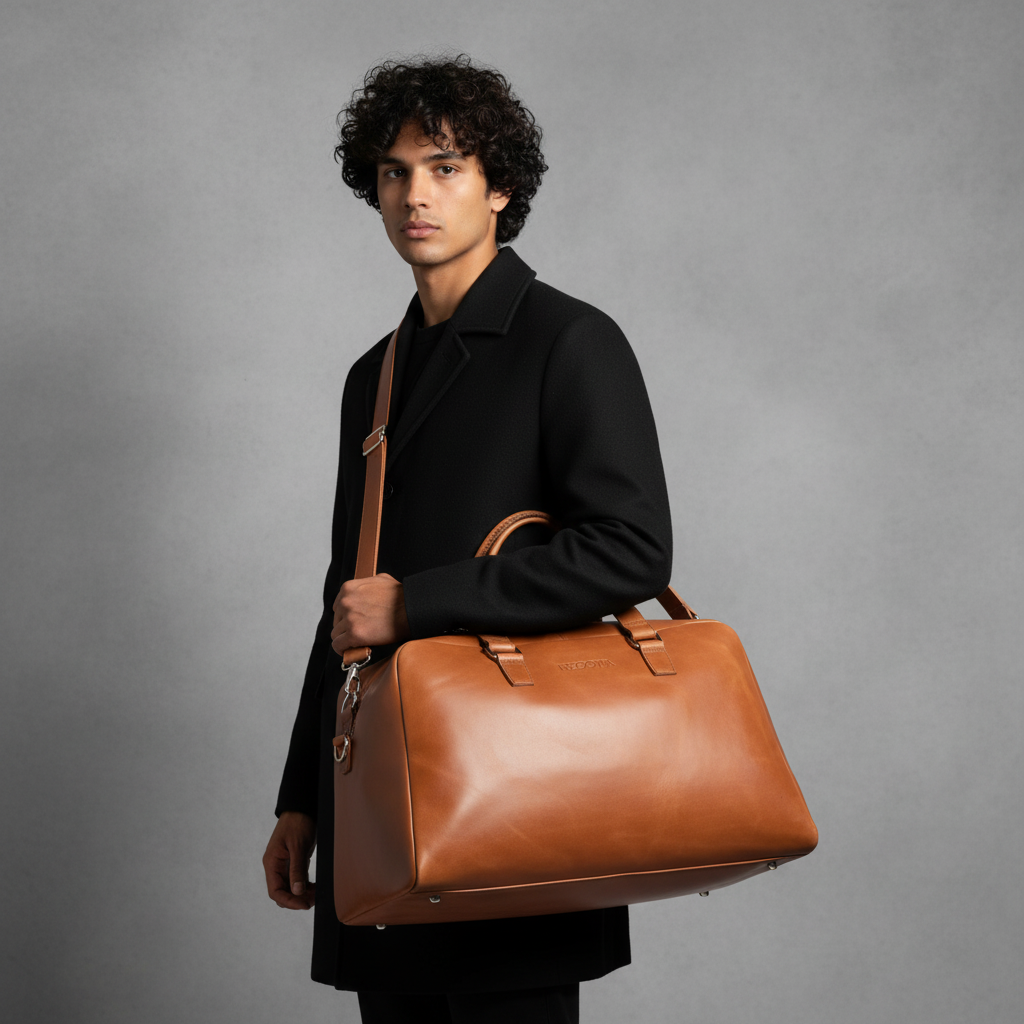
Both NEGOTIA briefcases come with a detachable, adjustable shoulder strap, so they can be worn cross-body rather than hanging from one shoulder. That closes some of the gap. It does not close all of it.
Capacity is closer than the shape suggests
A backpack looks like it holds far more. It holds somewhat more, and the difference sits almost entirely in one dimension.
Both backpacks are rated at 15 litres. Working from the listed external dimensions, the Orden is roughly 12.6 litres and the Sorel roughly 10 litres of outer volume, before you subtract leather, padding and structure. So the honest gap is a few litres, not a different category of bag.
What creates that gap is depth. The backpacks are 12 cm deep. The Orden is 10 cm and the Sorel 8 cm. Depth is what swallows the awkward items: gym shoes, a rolled jumper, lunch, a water bottle. A briefcase handles flat things beautifully and bulky things badly. If your bag regularly has to take something that is not paper-shaped, that 4 cm decides it.
Access: how often do you open it in front of someone?
This is the argument that gets missed, and for a lot of people it is the one that matters most.
A briefcase opens toward you while it sits on a desk or on your lap. You can reach a document, a pen or a card without standing up or turning around. The Orden takes this furthest, with a dedicated phone pocket, two pen holders, three card slots, a tablet compartment and a front pocket with a magnetic closure, so the things you reach for most never enter the main compartment at all.
A backpack has to come off your back before it gives you anything. On a train, in a queue, or standing in a client's reception, that is a small piece of theatre you perform every time. If your day involves four meetings in different buildings, it adds up. If you commute in, sit down, and stay put, it costs you nothing.
Both backpacks do have a hidden rear zip pocket, which sits flat against your back when worn. On a crowded platform that is the safest place on the bag for a phone or a wallet, and it is one thing a briefcase cannot offer.
Formality still counts, just less than it did
The old rule was simple: briefcases for client-facing work, backpacks for everyone else. That has softened considerably. A well-made leather backpack now reads as entirely professional in most European offices, including plenty of ones that would have raised an eyebrow ten years ago.
Where the old rule still holds is in the most conservative rooms, and in law, finance and senior client work in particular. If you are unsure how a room reads, a briefcase is the choice that is never wrong. A backpack is the choice that is usually right and occasionally slightly casual.
Worth saying plainly: this is about the room, not about you. Nobody is more serious about their work because of the shape of their bag.
Travel changes the answer
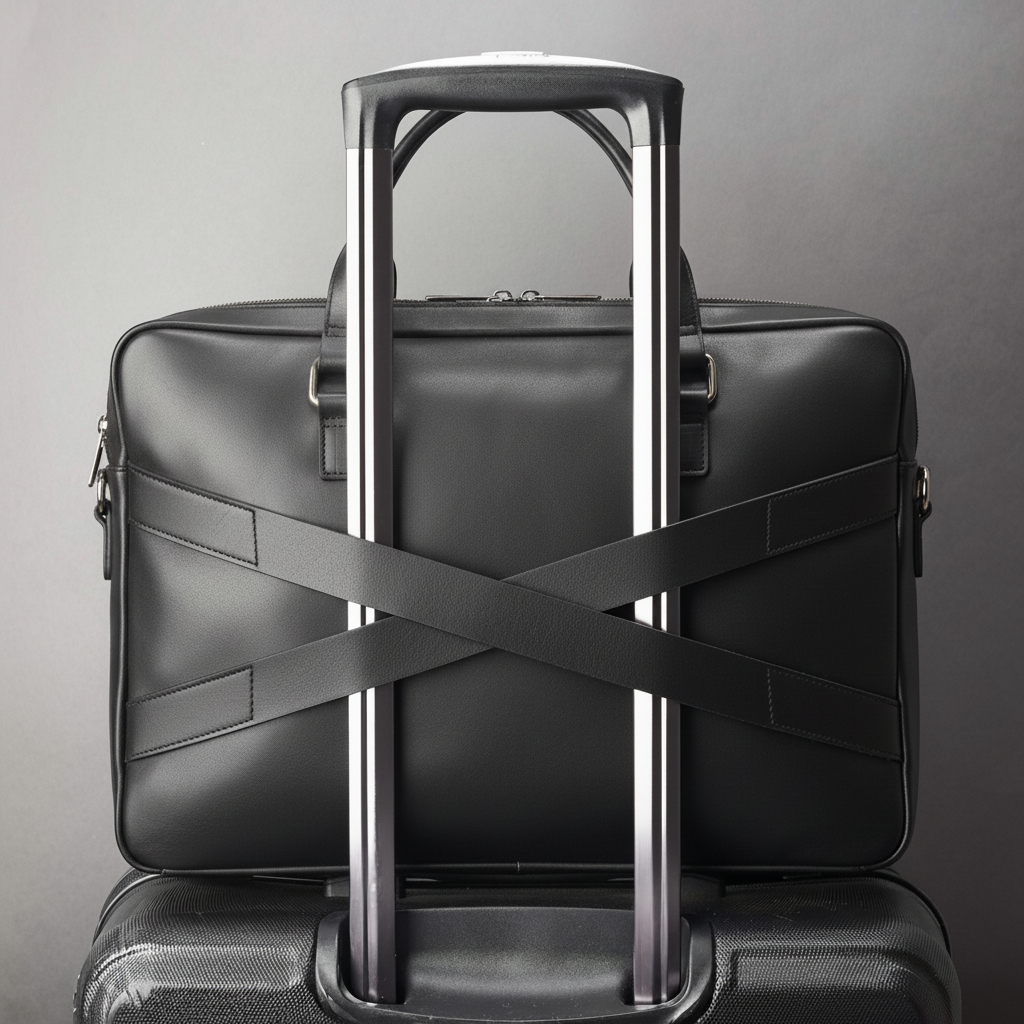
If you fly or take trains with a suitcase, look at the Sorel Briefcase first. It has a luggage sleeve that slides over a suitcase handle, so the bag rides on the case rather than on you through the terminal. It is also the lighter of the two briefcases at 1,200 g, and the slimmest at 8 cm, which matters when it goes under a seat.
A backpack has no equivalent trick. It goes on your back or in your hand. For a day of airports that is a genuine, repeated inconvenience.
A short way to decide
Answer these four and the choice usually makes itself.
- How long is the bag actually on you each day? Over about thirty minutes, weight distribution starts to matter more than anything else. Backpack.
- Do you carry anything that is not flat? Shoes, a jumper, a lunch box. Backpack.
- Do you open the bag in front of other people? Meetings, reception desks, client visits. Briefcase.
- Do you travel with a suitcase? Briefcase, specifically one with a luggage sleeve.
If two answers point each way, weight is the tie-breaker, because it is the only factor you feel every single day rather than occasionally.
Choosing within the NEGOTIA range
Among the backpacks, the Averon is the pared-back one: padded 16-inch laptop compartment, an internal zip pocket, a hidden rear zip pocket, 15 litres. Nothing surplus. The Kova is built for days that ask more, adding a spacious main compartment, a side zip pocket, adjustable shoulder straps and a YKK zip, which is the component most likely to retire an otherwise good bag when it fails.
Among the briefcases, the Orden is the organiser. Phone pocket, tablet compartment, two pen holders, three card slots, magnetic front pocket, hidden rear zip pocket. If you like everything to have a place, this is the one. The Sorel is the traveller: lighter, slimmer, with a luggage sleeve and a tablet compartment, and less internal subdivision.
If you are still weighing up materials, construction and what separates a bag that lasts from one that does not, start with the leather laptop bag buying guide. And if your real question is how well any of these protect the machine inside, we compared the formats directly in laptop sleeve vs folio vs briefcase. The full range sits in the bags collection. All four, briefcases and backpacks together, are in the leather laptop bags collection. Add the weekenders and you have the full men's range in men's leather bags.
One last thought. The bag you regret is almost never the one that was slightly too formal or slightly too casual. It is the one that was heavier than you expected, or that never quite held the thing you needed it to hold. Decide on those two, and the rest follows.


