



Refined or Sporty: What Decides How a Bag Reads
Put two bags side by side. Same leather, same price, same maker. One of them looks like it belongs on a chair in a meeting room. The other looks like it belongs in the boot of a car. Almost everybody sorts them correctly and almost nobody can say why.
It is worth knowing why, because the register of a bag is decided long before anyone touches it, and because most of what people believe decides it does not.
Structure, first and loudest
A bag that holds its shape when empty reads refined. A bag that collapses reads sporty. That is the single strongest signal, and it operates from across a room.
This is not a judgement about quality. A soft, unstructured holdall can be beautifully made and will outlast plenty of stiffer things. It simply reads as kit rather than as equipment for a working day, and that reading is not available to argue with. We went through the mechanics of this in weekender or duffel bag, where the structure is the whole of the difference between the two words.
Where it shows most is the half-empty state, which is the state a travel bag spends most of its life in. A structured bag at sixty percent full looks the same as a full one. An unstructured bag at sixty percent full looks like it has given up.
Hardware, and the amount of it
This is where most bags give themselves away, and the tell is quantity rather than quality.
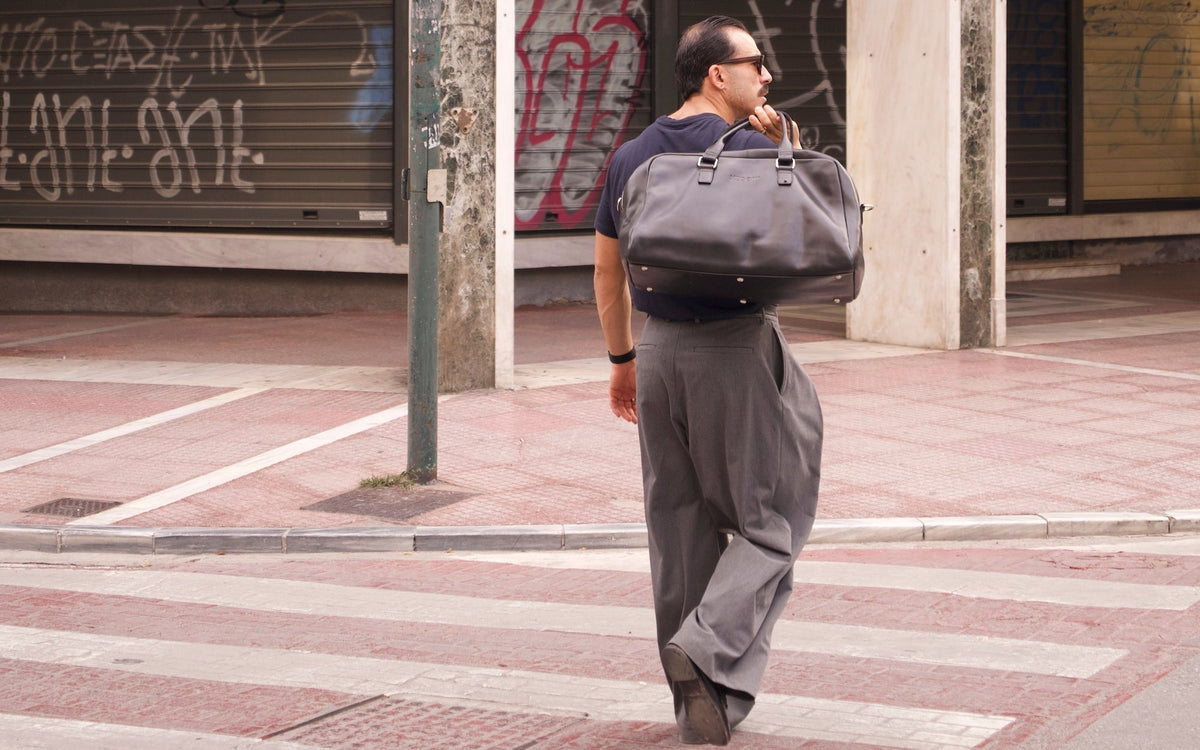
Count the metal. Refined bags have very little of it and what they have is small: a zip, two strap anchors, four feet if you are lucky. Sporty bags have D-rings, webbing loops, side-release clips, compression straps, a second handle, contrast stitching that announces where the panels meet. None of that is cheap and none of it is badly made. It is simply a different vocabulary, borrowed from climbing and from military kit, and the eye reads it instantly.
Here is the part that should be said plainly rather than skipped: the sporty vocabulary is often the more functional one. Webbing distributes load better than a leather strap. A side-release clip is faster than a buckle and will not wear. Compression straps genuinely stop a soft bag shifting. If your day involves carrying thirty pounds for an hour, the bag that reads sporty is the better bag, and anyone who tells you otherwise is selling you something.
Proportion, the one you cannot fake
The third tell is the hardest to design around and the least discussed. Refined bags are wider than they are tall, and shallow. Sporty bags are deep, and their section is round.
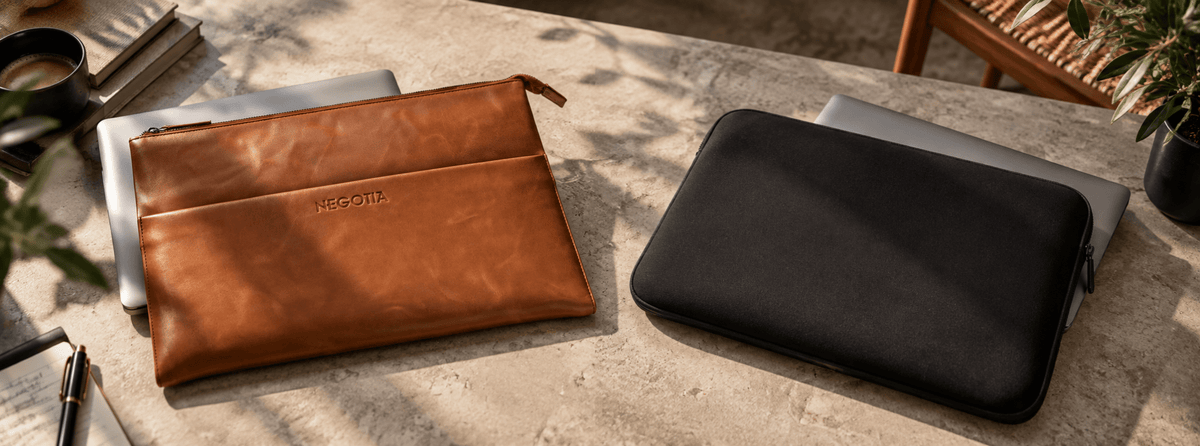
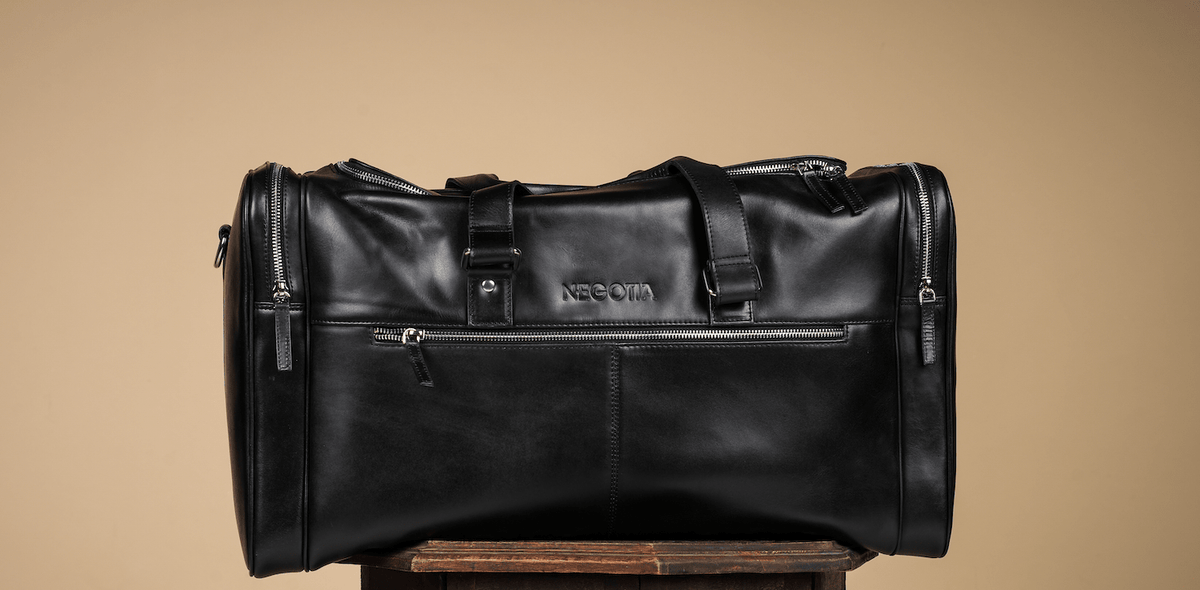
Depth is the dimension that does it. A deep bag reads as a container for bulk. A shallow one reads as a case for documents, which is the oldest professional shape there is. Our briefcases sit at 42 cm wide, 30 cm high and 8 to 10 cm deep, and almost all of the formality in them comes from that last number rather than from the leather. The Sorel is the shallower of the two at 8 cm and €169; the Orden is 10 cm, €139, and carries more.
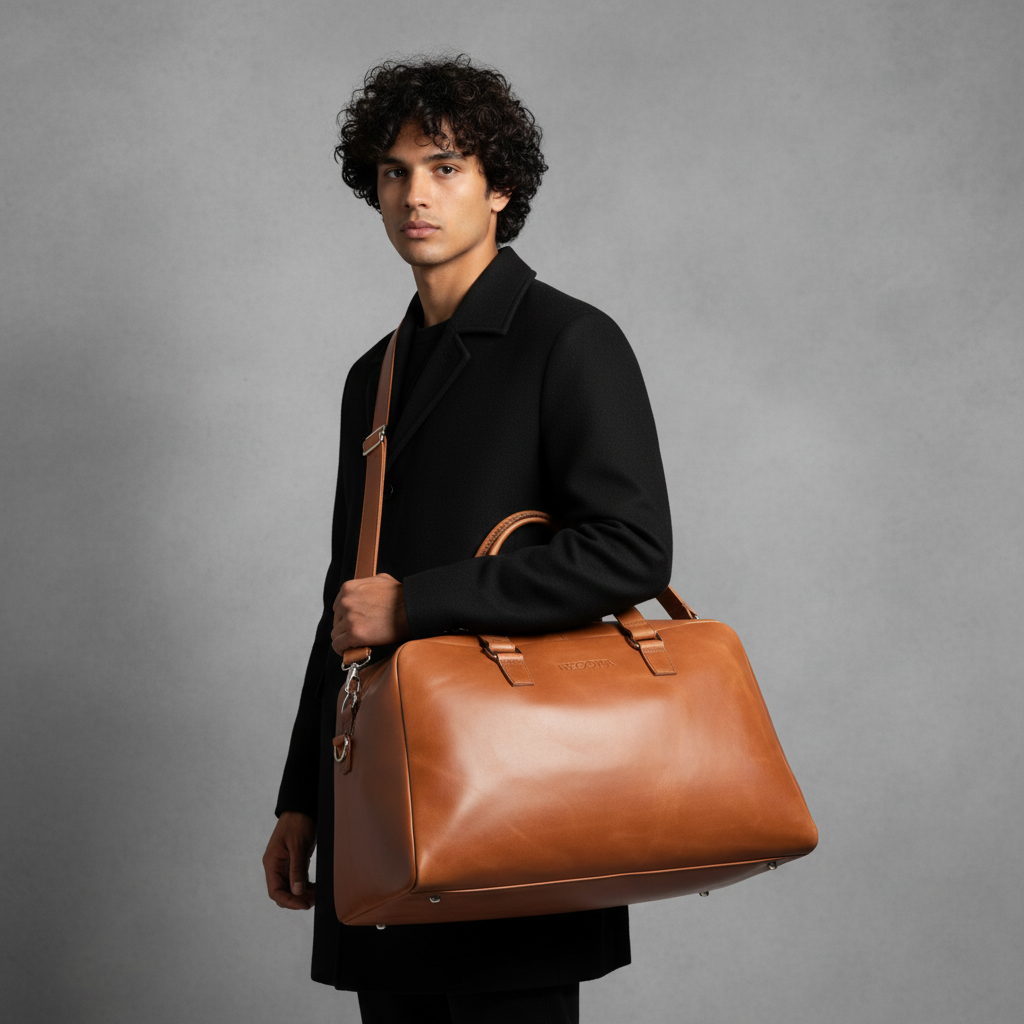
The weekenders work the same way. The Marent is 53 × 24 × 31 cm and the Valen is 49 × 23 × 28 cm, both flat-sided rather than round. At 35 and 32 litres they hold about what a soft duffel of the same footprint holds. They just do not look like one, and the only reason is that the sides are flat.
The logo rule has inverted
A visible logo used to read as expensive. It now reads as sporty, or worse, as insecure. The shift happened quietly over about fifteen years and it is close to complete in European business dress.
If a bag's maker is identifiable at four metres, that is a decision the maker took about who they are selling to, and it is a decision about volume rather than about you. The refined end of the market now signals through shape and restraint, which is harder to copy and considerably harder to market.
What money does not buy here
None of the three tells is a price signal. An expensive bag with a deep round section, visible branding and eleven pieces of hardware will read sporty, and spending more will make it read more sporty rather than less. A modest bag that is flat, shallow and quiet reads refined.
So the register is not something you buy. It is something you choose, by leaving things out. That is an uncomfortable thing for a leather house to write down, because restraint is the one feature we cannot charge extra for.
Where this range sits
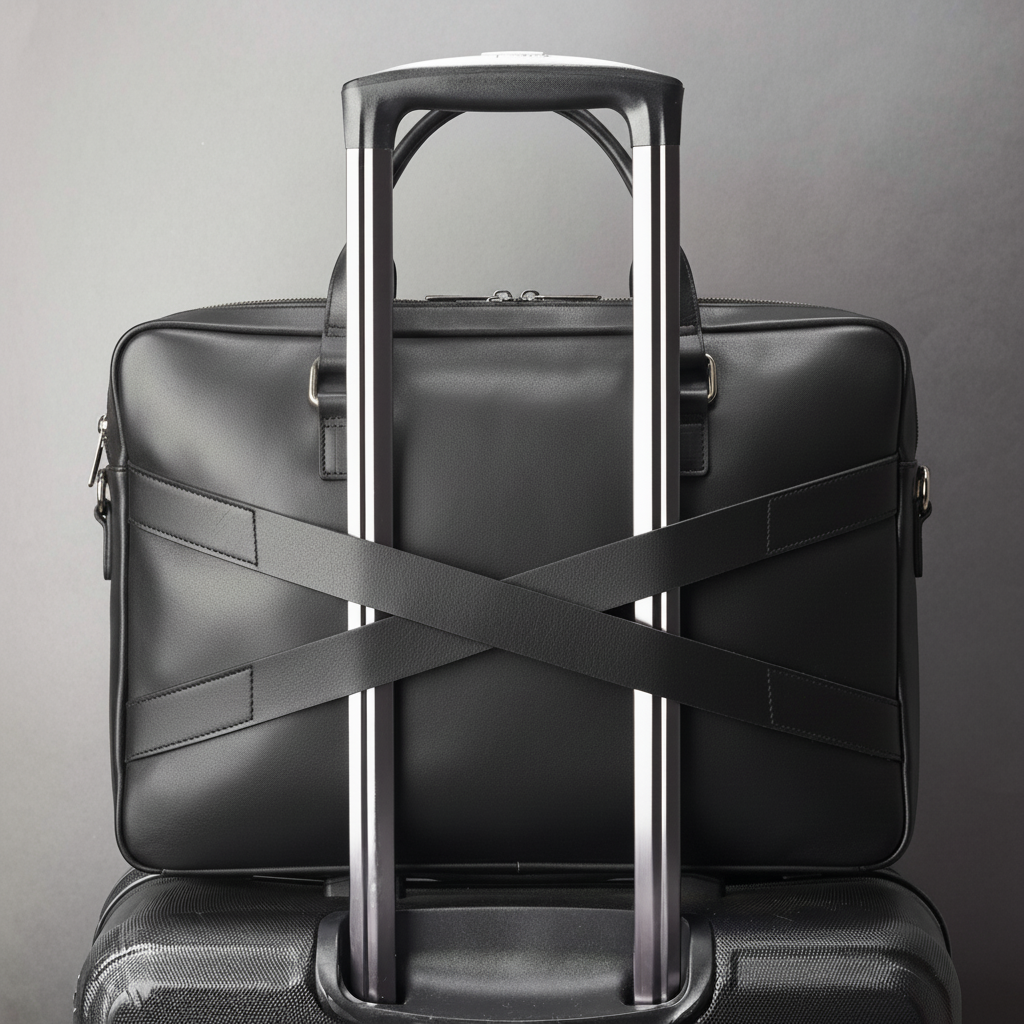
Deliberately at the refined end, and it is worth being clear about what that costs you. Our bags hold their shape, which means they never fold away and they occupy their full volume in your hallway permanently. They use leather straps rather than webbing, which looks better and carries weight less comfortably. Neither weekender lists a trolley sleeve. All of them are built around a padded compartment for a laptop up to 16 inches, with cotton lining and YKK zips, in nappa leather, in black or cognac and nothing else.
If you want a bag you can overfill, throw in a car and forget about, this is the wrong range and a good soft duffel is the better purchase. If you want a bag that looks composed when it is half empty on a hotel luggage rack, this is what that costs.
The colour question sits alongside this one and is answered in black or cognac. The format question, backpack against briefcase, has its own register and is covered in backpack vs briefcase for work. The full range is in the men's leather bags collection.
The point
Structure, hardware and depth. Those three decide how a bag reads, they decide it in the first second, and they are all visible in a photograph before you have read a single specification.
Which means the only real question is which room you want the bag to make sense in. Answer that first and the rest of the decision gets much shorter.